Mission to Kenya 2005

Monday, May 01, 2006

WELCOME

This weblog began as an Internet journal of a United Methodist Church "Volunteers In Mission" trip to Kenya January 6-22, 2005. Following the mission, the postings were expanded and photographs/links added.

We hope it will inspire others to participate in future misisons like the one to Kenya that we are leading in January of 2006.

Remember that a blog is a linear time-based stream of information ~~ so read it from the bottom entry to the top entry.

To enlarge pictures, put your curser on the image and left double-click your mouse. To make the enlarged image go away, click the green "BACK" arrow in the upper left corner of your screen.

Monday, May 09, 2005

Florence Mubichi is in Oklahoma City


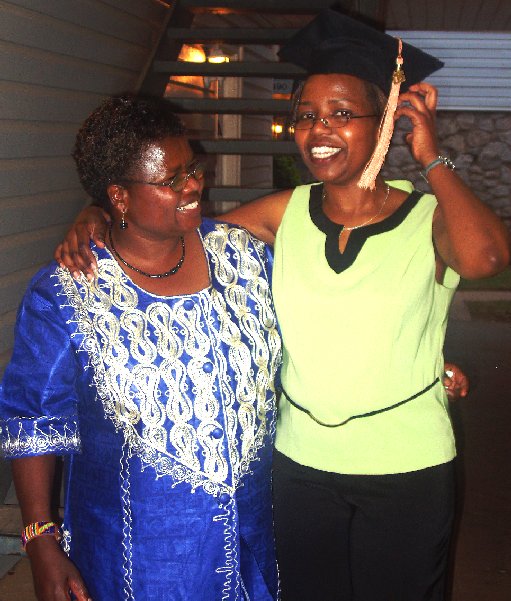
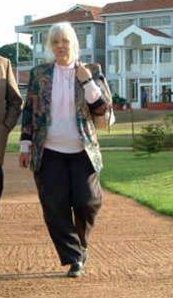
Florence & Fridah Mubichi, May 7, 2005

Hurray. Florence made it to Oklahoma City in time to see her daughter, Fridah (above) graduate from Oklahoma City University with a Masters in Marketing. This photo was taken at a small reception following the ceremony at Fridah's apartment in Oklahoma City. Florence is recovering from jet-lag (22 hour trip) but we will see her Tuesday night with we gather at Johnnie's on Britton for dinner.

Wednesday, April 06, 2005

Global Voices Online on Kenya Blogs

Global Voices at the Berkman Center, Harvard Law School considers nine blogs by and about Kenya. Read about it by clicking here.

Wednesday, March 30, 2005

NEXT MISSION TO KENYA: JAN 2006

The Volunteers In Mission (VIM) office of the Oklahoma United Methodist Conference has approved a return mission to Meru, Kenya January 12-28, 2006. Team members will stay at the Bio-Intensive Agricultural Center and begin construction of a small (30' x 60') library at the Kaaga School for the Deaf. Click here for more information on this mission.

Sunday, January 23, 2005

COMMENT FROM REBECCA

COMMENTS AND PRAYERS FROM FRIENDS AND SUPPORTERS

Click on "Comments" below to read comments left during the trip.

Saturday, January 22, 2005

FRIDAY, JAN 21 - HEADING HOME


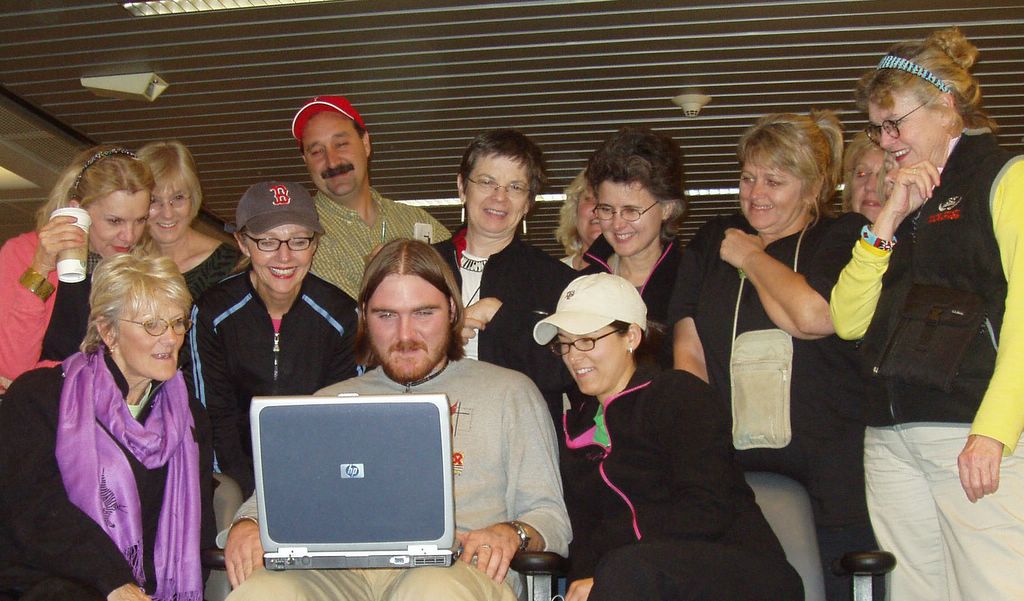
The group is in O'Hare Airport looking at our photos that we have loaded onto Marshall's computer.

Friday, January 21, 2005

LUNCH AT KAREN BLIXEN COFFEE GARDEN AND RESTAURANT


Lunch on the verranda

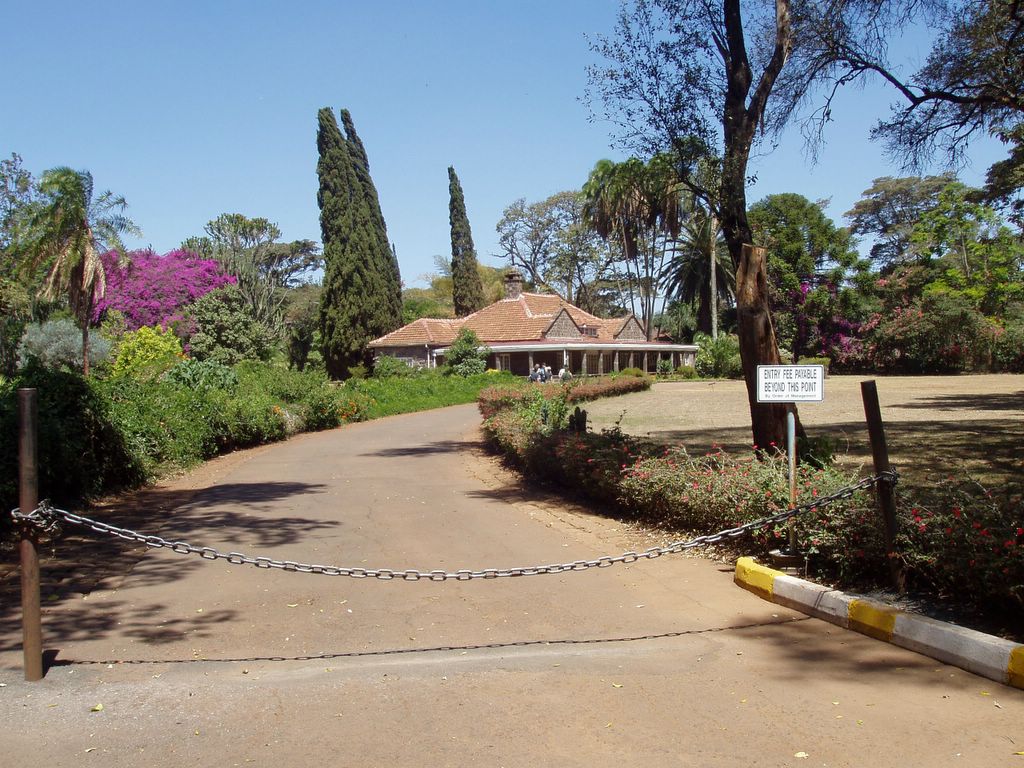
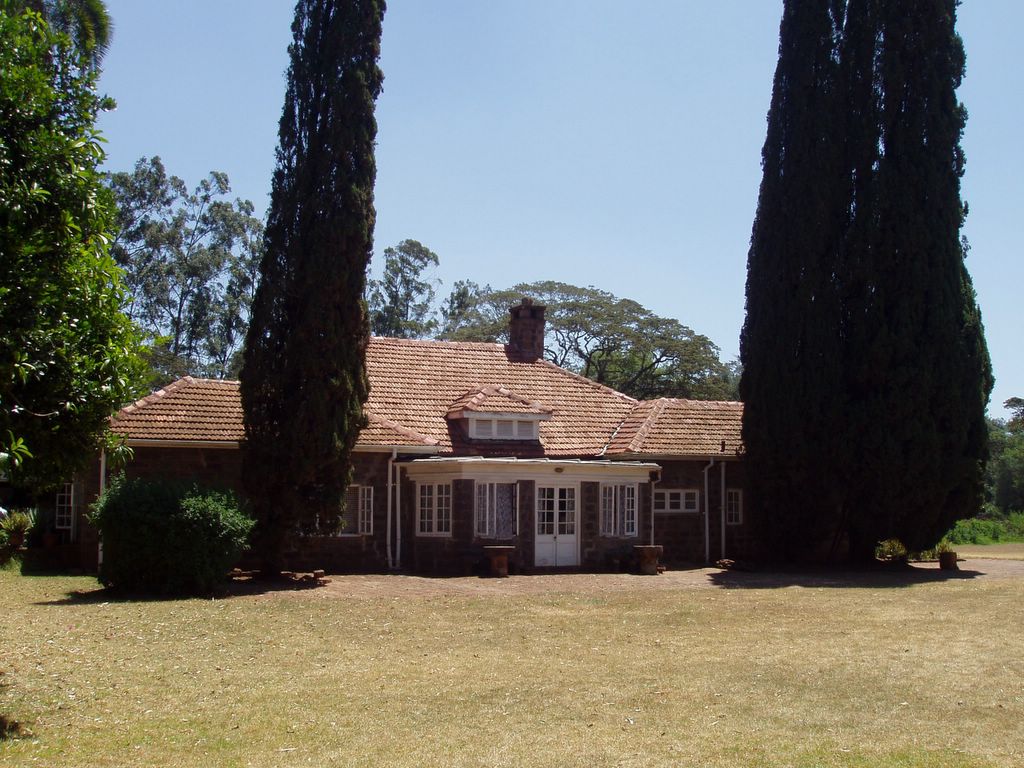
A cottage on Karen Blixen's farm, the colonial bungalow used by her brother, Thomas Dinesen, when he lived in Kenya from 1921-1923, has become the centerpiece of a new eating establishment. The cottage, which is east of the Karen Blixen Museum--Karen Blixen's home in Africa--in the Nairobi suburb of Karen, was made part of a tea garden in the 1990s. The property has recently become a restaurant featuring an architectural restoration of Thomas Dinesen's bungalow.

Source: http://www.karenblixen.com/coffeegarden.html


TOUR HOME OF KAREN BLIXEN (aka ISAK DINESEN) ~ ("I had a farm in Africa, at the foot of the Ngong Hills…"


West of the city, the suburb of Karen is named after Karen Blixen, author of 'Out of Africa'. Much of the suburb stands on her old farm.

We toured her house which is now the Karen Blixen Museum.

If you click here, you can see pictures from each room (take a virtual tour of the museum).

Here are two other good links -- a writeup about the house and at this site you can even watch videos! (http://www.africanmeccasafaris.com/kenya/nairobi/excursions/karenblixen.asp ).

FRI, JAN 21 - SHOPPING AT UTAMANDUNI CRAFT CENTRE


UTAMANDUNI CRAFT CENTRE

Following breakfast at the hotel, Daniel and his drivers took us first to the Utamanduni Craft Center. This was a wonderful place to shop. Even though we did get lower prices for some of the same or similar items later in the day at the Village Market, there was a huge range of items to condiser here and there is something to be said for shopping where prices are set and reasonable! Suffice it to say, we dropped a bundle and all went away thrilled. Downside: I never did make it to the Cultural Village (see their website above) which says of the village:

Utamaduni's cultural village consists of four traditional homes, built according to the customs of the Masai, Kikuyu, Luo and Miji Kenda tribes. Members of the Mzizi Cultural Centre will be happy to show you around these homes and to explain their construction and traditions. Dancers from the Mzizi Centre regularly entertain Utamaduni's clients with vibrant and colourful displays of traditional African dancing.

Thursday, January 20, 2005

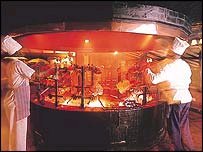
DINNER AT THE CARNIVORE RESTAURANT


This place was a huge hit for all but the 3-4 committed vegetarians in the crew. (TIP: Don't order the vegetarian pizza. What WAS that?) There is also a shop that sells T-shirts, aprons, etc just at the entrance and several nice shops around the side of the restaurant. The only down side for me was that I was too exhausted to eat. You don't want to make sudden moves at this place as a waiter may be coming o ver your shoulder with a hue sword holding a leg of . . . whagt? giraffe? lamb?

Here is a write-up about the restaurant I found on the web:

What are you having for dinner tonight? Perhaps you fancy a nice piece of crocodile barbecued in spicy sauce, or maybe zebra and salad, warthog and chips, or even grilled giraffe.

They're all on the menu at the Carnivore restaurant in Nairobi, Kenya, which has just been selected as one of the fifty best places to eat in the world by London-based Restaurant Magazine.

A rare honour indeed, especially as it's the only establishment in
Africa to have made the list which was drawn up by a panel of international reviewers, restaurateurs and raconteurs.

In the restaurant whole joints of meat are roasted on traditional Maasai swords over a huge charcoal pit that dominates the entrance of the restaurant.

Carnivore's head chef Joseph Gacheru said he thinks this unique layout caught the judges attention. "Carnivore is totally different because the kitchen... is right at the entrance of the restaurant," he said. "When the guests are coming in that is the first impression they see... the kitchen and the meat being roasted there."

Mr Gacheru said the restaurant only buys meat from suppliers licensed
to cull wild game by Kenya Wildlife Services.

While The Carnivore restaurant is popular with locals as well as
tourists, Mr Gacheru said there has been a slump in the number of tourists dining in the restaurant since the war in Iraq began, but local demand has stayed strong.

Source: http://news.bbc.co.uk/2/hi/business/2987849.stm


THURSDAY, JAN 20 - DRIVE TO NAIROBI THRU EQUATOR


BETH AT EQUATER

Early afternoon, we loaded luggage on the 3 vans and headed back out those awful "roads." We stopped at the equator for "a rest stop," photos and a little shopping, then pressed on. Arriving in Nairobi at dinner time, we checked into the Methodist Guest House. After dragging our luggage to our rooms, we went to The Carnivore for dinner.

Wednesday, January 19, 2005


LION


On our afternoon safari ride, we saw a lion and 2 lionesses - from about 20 feet away!

There were about 10 vans in a group and we just stayed and looked and looked and looked until the lion finally had had enough and got up and wandered off and his wives had to abandon their nice shady spots to follow behind him.

WENDY ELLSWORTH - BEAD ARTIST


Wendy with Alfred at Samburu village

We met Wendy Ellsworth (click here for her biography) (and here for her resume), an American women staying at the lodge, who is a professional bead artist. Last year, she received a grant from (I think) the Pennsylvania Arts Commission and used the funds to travel to Kenya to study the beadwork of the Maasai and Samburu tribes. She was so impressed that she funded her own return trip here this year.

She told us that historically the Samburu used dyed seeds to make their regalia (face, collars, bracelets, anklets, etc.) but then (I think about 50 years ago) they switched to using glass beads. They have used exclusively beads from Czechoslovakia which are rough and have very small holes.

This trip, Wendy brought beads made in Japan that are in new colors and are laser made. They are a higher quality bead and have much larger holes. The Samburu have used exclusively wire and she is teaching them to use needle and thread, too.

She has been working with the women of this village 4 days - teaching them new beading techniques and new designs. She tells us they are thrilled.

When Wendy was here last year, she hooked they up with Beadsforeducation.org and with a friend of hers who markets beadwork and they have generated $30,000 in sales in the USA. Sales of the Samburu beadwork puts girls in school in Kenya.

Wendy has them making chokers and earrings -- both new products for them. You can look at Wendy’s work at her website. It is pretty awsome!

She is also working with the Africa Wildlife Foundation. Wendy is especially pleased that she has found enough friends to sponsor 140 Samburu girls so they can attend school which costs $360 a year for one child (see beads for Education on how you can support a girl).

SAMBURU HUT


At 8 am and 8 pm, the men convene a parliament to discuss issues; women are not allowed within earshot. (DO NOT get any ideas, gentlemen!). It is also at these parliaments that issues such as marriage and circumcision get decided.
The married women have a large hole in one earlobe and wear a beaded hoop in that ear. A string of beads that is worn around the neck is threaded through that hoop.

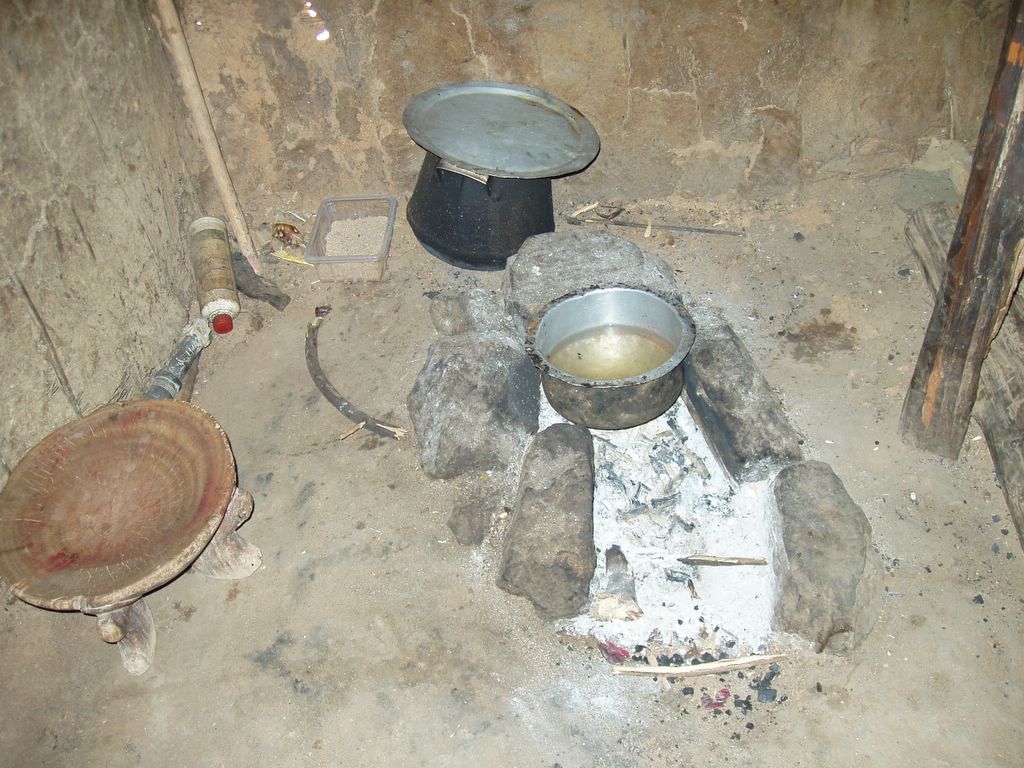
INSIDE SAMBURU HUT - COOKING AREA


Margaret is teaching a pre-school at the village. She told us that they use a witch doctor rather than a physician, surround their village with thorny shrubs to protect them from animals and other tribes men who steal their cattle and kill their tribesmen (mostly from Sudan and Ethiopia - both of which are nearby). They buy maize from members of another tribe but feel they are overcharged.

Rich men have 8 wives (one for each cow) and each wife (and her children) live in a separate hut. Poor men have only 2 or 3 wives.Wives have about 15 children but many die. If a woman’s husband dies, she ca not remarry. If her husband’s family is kind, she can continue to live with them; otherwise she must return to her own family.

There were only 2 or 3 young men present -- the men “had gone to visit with men in neighboring villages”. The boys were with the herds of cattle and goats and camels grazing in the area. No one owns land, they just move about to where the good grass is at the time.


They told us the color of the beads have meaning: red = food, white = milk, black = their skin color, blue = good luck, orange = their nation, yellow = peace, green = the environment.

SAMBURU WOMEN


MARGARET (LEFT) WITH MARRIED, UNMARRIED SAMBURU WOMEN

When we reached the village, a young women who spoke excellent English named Margaret met us and was our “guide.” They collected their fee and then the women of the village (about 12) sang and danced to welcome us. Then we watched a blacksmith make knives, walked through a typical hut (pretty bleak), heard about their customs (they are nomadic herders who consume mainly blood, milk and meat, they practice polygamy and male and female circumcision, etc.).

DANCING WITH SAMBURU WOMEN


A Samburu settlement is known as a nkang or manyatta. It will normally consist of six or more huts built in a rough circle with an open space in the centre. The circle of huts is surrounded by thorn bush fence.
Source: http://en.wikipedia.org/wiki/Samburu

VISIT TO SAMBURU VILLAGE


We returned from the morning game drive about 10 am. After we had breakfast at the lodge, we reboarded our vans for a trip to a nearby Samburu village.

The Samburu are like the Maasai in that they strive to maintain their culture and heritage. They intermarry with Maasai tribe members although it seems the Samburu hold to traditional ways even more that the Maasai (see links to writeups below).

You may not take their picture nor can you photograph their belongings such as their herds of cattle, goats, camels, etc. Instead, we paid about $10 per person to visit a select site and there we could ask questions, take photos, and purchase their wares.

This picture of the women in the village greeting us upon arrival.

This link takes you to an excellent writeup about the Samburus of Kenya.

So does this one.

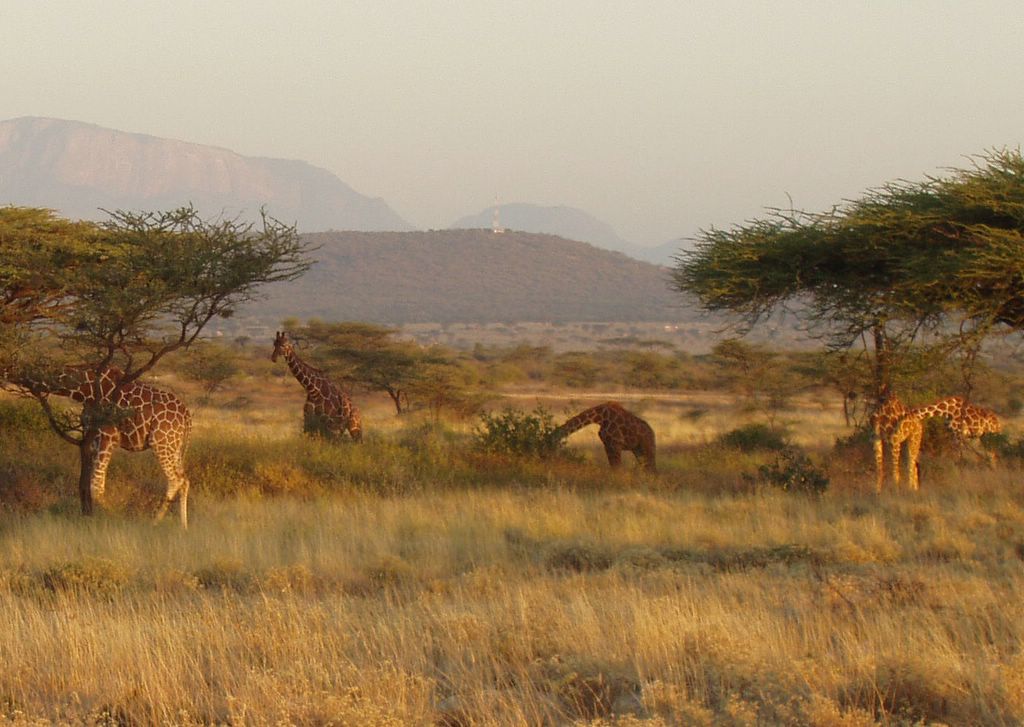
GIFAFFE AT SUN UP


Our final safari drive before brunch at the lodge and the drive to Nairobi.

WED, JAN 19 - 6 AM SAFARI RIDE


We went out at 6 am in twilight. We saw many of the same kinds of animals as yesterday but today we saw them in herds. We saw 3 or 4 zebra grazing, 5 grand gazelles, 8 giraffes, a water buffalo, a herd of 20+ impala, baboons, tiny antelope the size of jack rabbits (sounds like dick-dicks), and lots of birds including the secretary bird, a saddlebilled stork, and a hook beaked bird. Oh, and monkeys. Someone in the group, I think Jennifer Price, is keeping a list of the birds we have seen for Ron Rosser.

Tuesday, January 18, 2005


ELEPHANT PARADE

HEADING OUT ON AFTERNOON (3:30-7) SAFARI


We went out on a game drive at 3:30 and got back after 7 pm.

We saw elephants impala, water buffalo, guinea, giraffes, oryx, ostriches, tons of birds.

Dinner was a buffet on the lawn with BBQ and Samburu dancers (like Maisai - and, Daniel told us, they WILL stone your van if you take their picture without permisison.

Looks like Sea Island in Georgia.


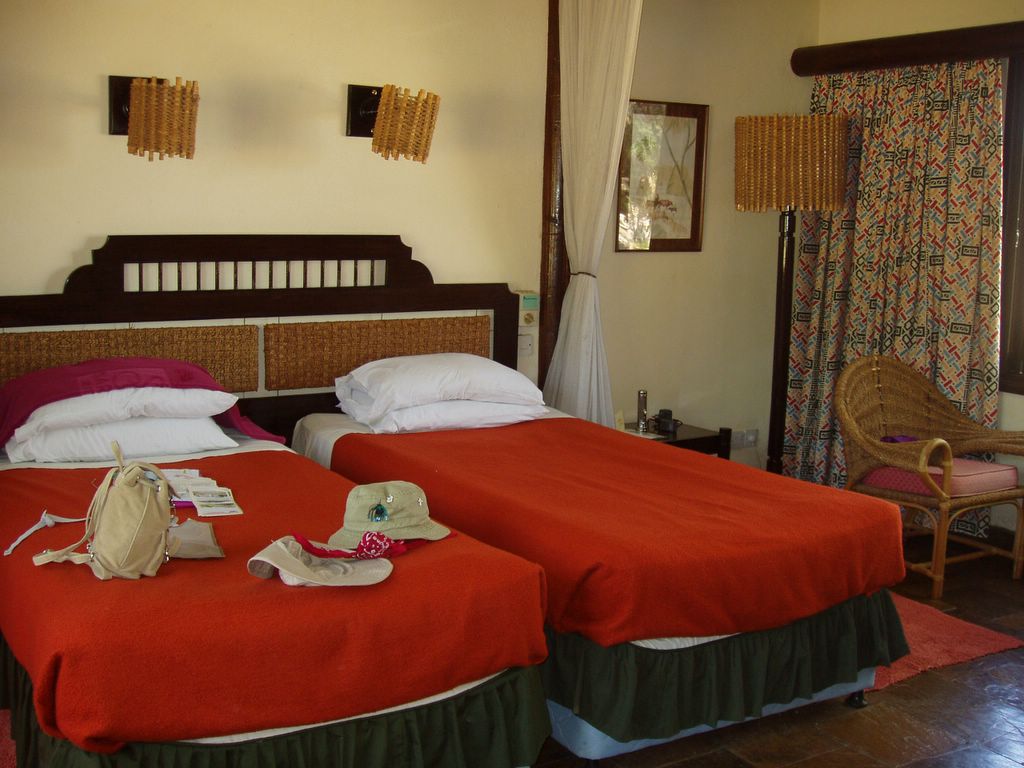
LOGDE BEDROOM

MONKEYS AT THE LODGE


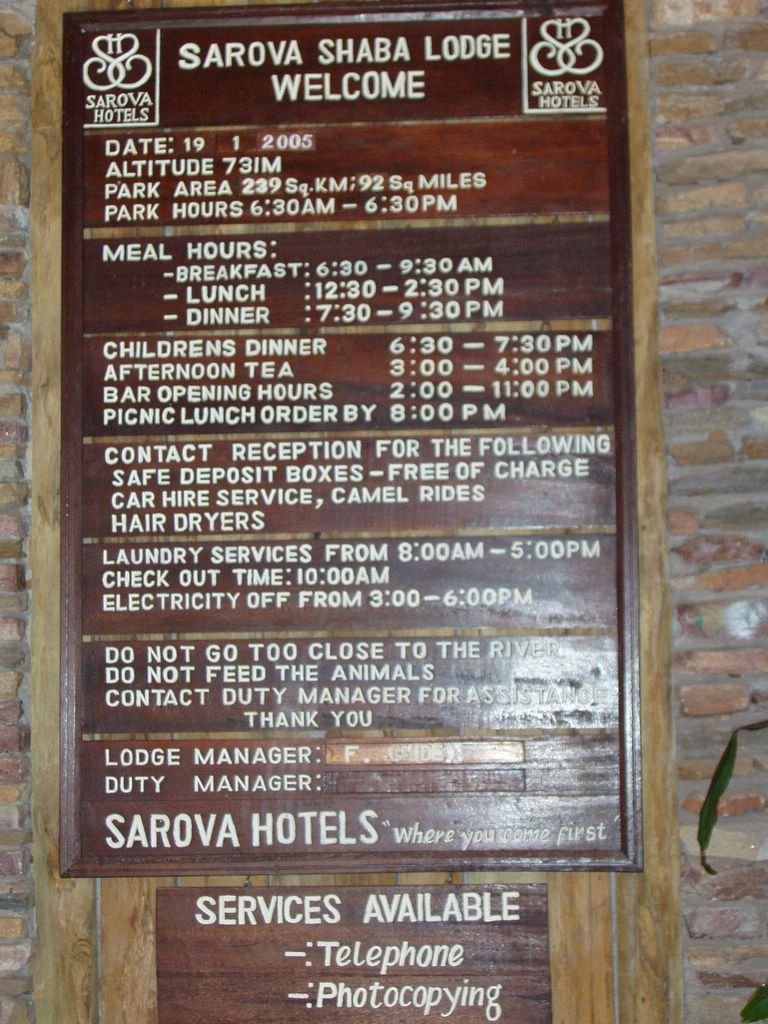
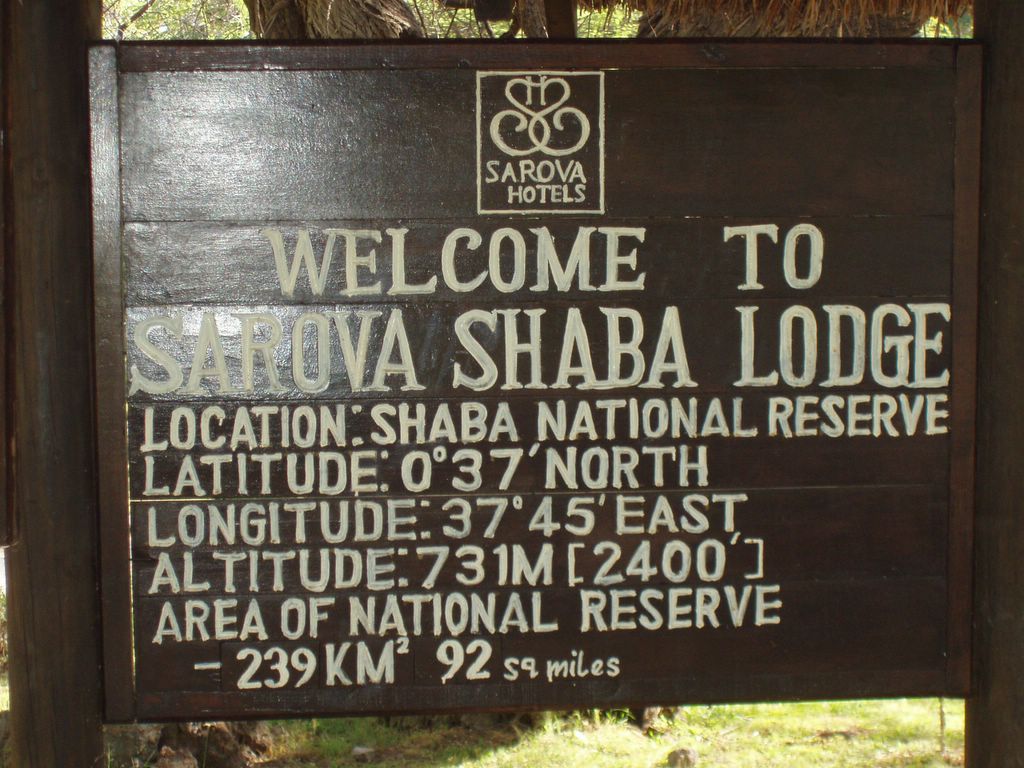
We are located within the Shaba Game Reserve.

The hotel describes itself quite rightly as “an oasis in the heart of Eastern Kenya. A unique African experience for those of you with a true sense of adventure.”

This game reserve was made famous by the late Joy Adamson (she was murdered by poachers) and her lioness, Elsa. The area is sometimes referred to as “Born Free country.”

The lodge sits on the banks of the Uaso Nyiro river which, we are assured, is full of crocodiles (the “feeding” can be observed at 7 pm each day).

There are also lots of little monkeys around; one of them manages to swipe a roll of f the buffet table at every meal! There are 80 chalet style rooms and a few fancier suites. The area supports giraffe, Grevy’s Zebra, Gerenuk and Beisa Oryx, elephant, and 150 recorded species of birds. There is a beautiful swimming pool and trickling (man-made) streams throughout the resort grounds.

We wish you were here to enjoy it with us!


WELCOME


Click here for lodge website.


TUES, JAN 18 - DRIVE TO LODGE


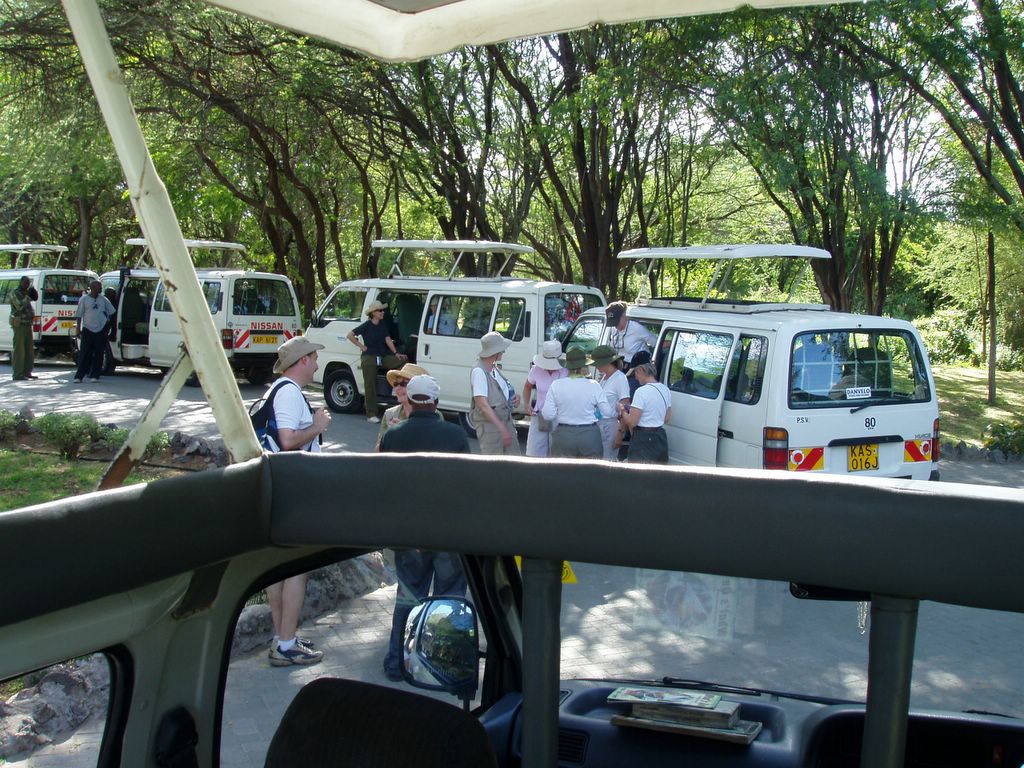
We left the bio-intensive agricultural center about 9:15 am in Daniel's three vans and had paved road for the first hour.

Then we hit the worst roads yet - truly awful. We laughed that it was like being in those electric massage chairs.

The lodge is beautiful and modern. The rooms are large and beautifully decorated and clean. The restaurant is like the tiki house at Disney World (so I am told) and the food is buffet style and delicious.

We are back amongst the living.

Monday, January 17, 2005

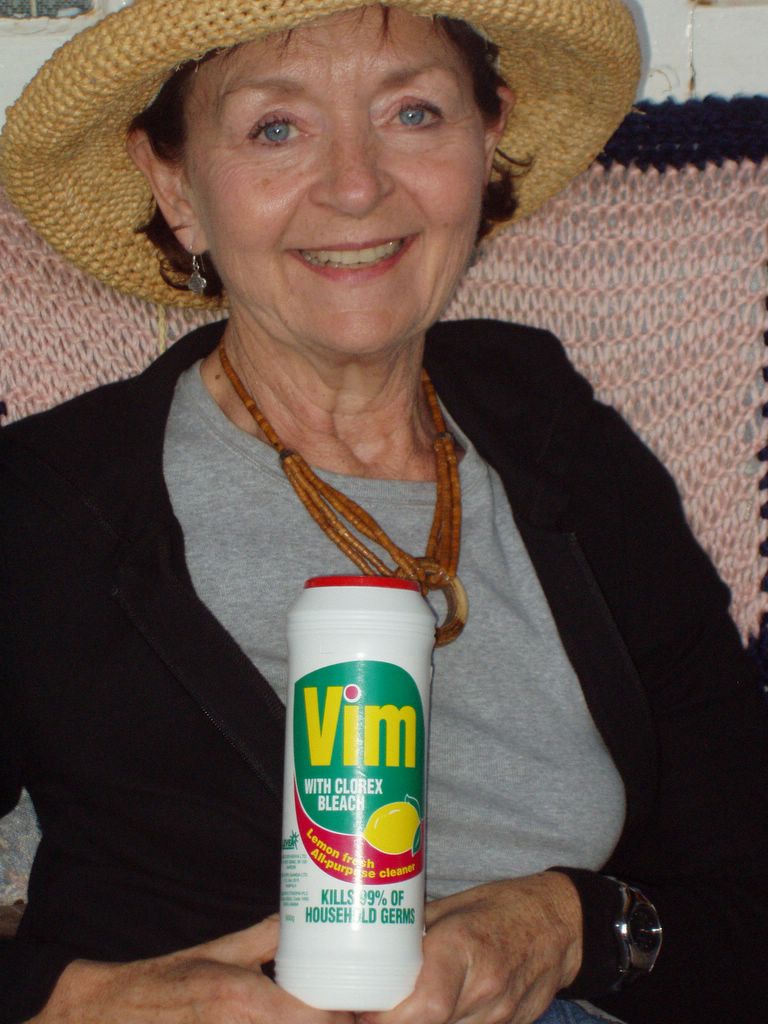
VIM STANDS FOR MORE THAN VOLUNTEERS IN MISSION


One final thought before leaving the farm ..

We found this can of kitchen cleanser in the bathroom of John's home.

Do you suppose Africans who see the "V.I.M." insignia on our clothes think we are lemon-scented cleaners?

Thanks, darlene, for posing for this silly shot!

NOTE FROM SHIRLEY, FINAL THOUGHT FROM JEAN

NOTE FROM SHIRLEY

Shirley wants her family to know that, at the Mubichi party last night, she ate goat and danced native dances with the women (be sure to tell mother).

ALL of the women danced in a circle while the African women sang songs.

Periodically, they would stop and explain to us the lyrics.

We especially liked the onE about women being the salt of the Earth!

That is certainly the case with these extraordinary women in Meru.

Shirley

A FINAL THOUGHT FROM JEAN

It is midnight and, like everyone else on this trip, I am dead tired. But I wanted to add a final thoughts before signing off. I am normally not very good at expressing my feelings about faith and religion and tonight I am further handicapped by extreme fatigue. But here goes.

First, we want everyone to know how very much we appreciate your prayers for our wellbeing while we are in Africa. Even from afar, we can feel your love and concern and well wishes.

Second, we want to thank each person who contributed in one way or another to this mission trip. We have brought a bag of "goodies" to every agency or facility we have visited -- thanks to your generosity. Thanks especially to Jeff; your gifts are now scattered across Maua and Meru and are in the hands of very deserving people. Bless you.

Finally, we want you to know that we feel very bless to have been able to make this journey. We have encountered a Christianity here in Kenya that is refreshing and invigorating and rejuvenating. People introduce themselves by saying, "My name is Betty Mwangi and I am born again through Jesus Christ my Savior." We pray before and after every meeting and meal and often end a gathering by reciting in unison a benediction. No Methodists here smoke or drink alcohol. I have not heard a sarcastic remark or unkind comment in all the time I have been in Kenya. There is a wholesomeness that is worthy of emulation. Conversation with Kenyans begins with sincere inquiries about yourself and your family. Only after they have taken a little time to get to know you and to assess how you are REALLY doing do we get down to the business at hand. The members of this VIM trip talked a lot this evening at dinner about the many ways we have been touched and changed by the wonderful people we have met here in Kenya. All agreed this has been a God directed mission and that we Americans have been the primary beneficiaries.

Jean


JOHN AND JANET MWALIMU - BIO-INTENSIVE FARM, MERU


Gardens at the farm

Tonight, everyone (except Alfred and Jean) ate dinner at the bio-intensive farm and is sleeping in the farm's dormitories. Marshall rewired one of the showerheads (which contains a heating unit) so there are now two functioning showers at the farm! Yeah.

Jean and Alfred spent their final night in Meru at the home of Steven and Florence Mubichi. We stayed up very late talking about all the deserving projects we visited (we are suffering from a mild case of "donor fatigue") in an effort to prioritize and focus. We also exchanged gifts and I am still wearing my wonderful Kenyan necklace and earrings as I type this at midnight!

Everyone has asked me to post the contact information for the director of the farm and his wife, Janet, who was matron of Maua Hospital for 21 years and just retired (Stanley Gitari's wife, Mary took over the position after Janet retired). They have been simply wonderful. So here it is:

John and Janet Mwalimu
PO Box 443
Meru 60200
Kenya, Africa

Email: Mwalimu@salpha.net

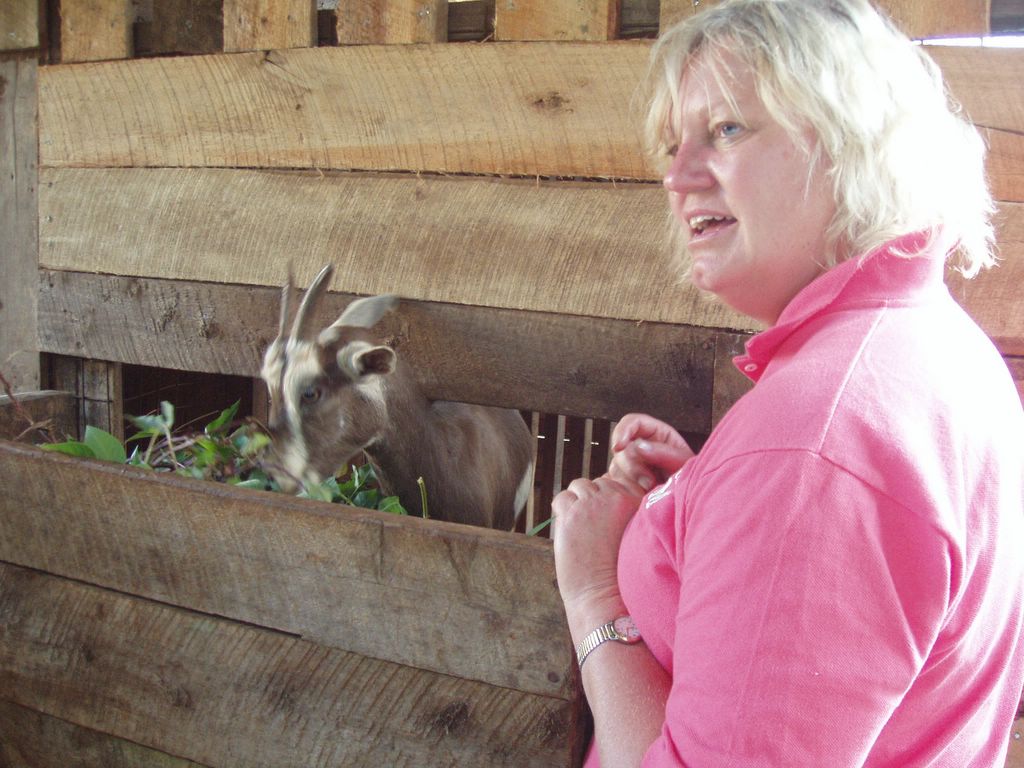
REBA THE GOAT


As we arrived back at the farm, John pulling in with a goat he had just purchased with the cash gift we had presented earlier. We wanted to name this lovely, noisy, female goat soomething to remind John of Oklahoma. After considerable discussion, she was named in honor of Oklahoma country and western signer Reba McIntyre. Jennifer P looks on approvingly.

Re-e-e-e-e-e-e-e-e-e-b-a-a-a-a-a-a!

WOMEN'S WEAVING PROJECT, MERU, KENYA


Daniel and his drivers (who transported us from Nairobi to Maua) drove today to Meru and will be at the Bio-Intensive Farm at 8:30 AM tomorrow to drive us to Samburu National Park for our safari experience.

We have left a lot of our clothing behind with Florence; she will take it to Maua Methodist Hospital tomorrow for the Palliative Care Program.

We don't know if we will have access to the Internet again during our travels. So, if you don't hear from us during the next three days, know that we are all healthy and feeling great and having a wonderful time.

We marvel at the degree to which everyone has gotten along (even though many of us did not know each other before now). We have loved having young people (Jennifer, Marshall and Summer) with us.

We send you our love and pray that God will bless you and keep you safe and well until we see you again.

MONDAY AFTERNOON


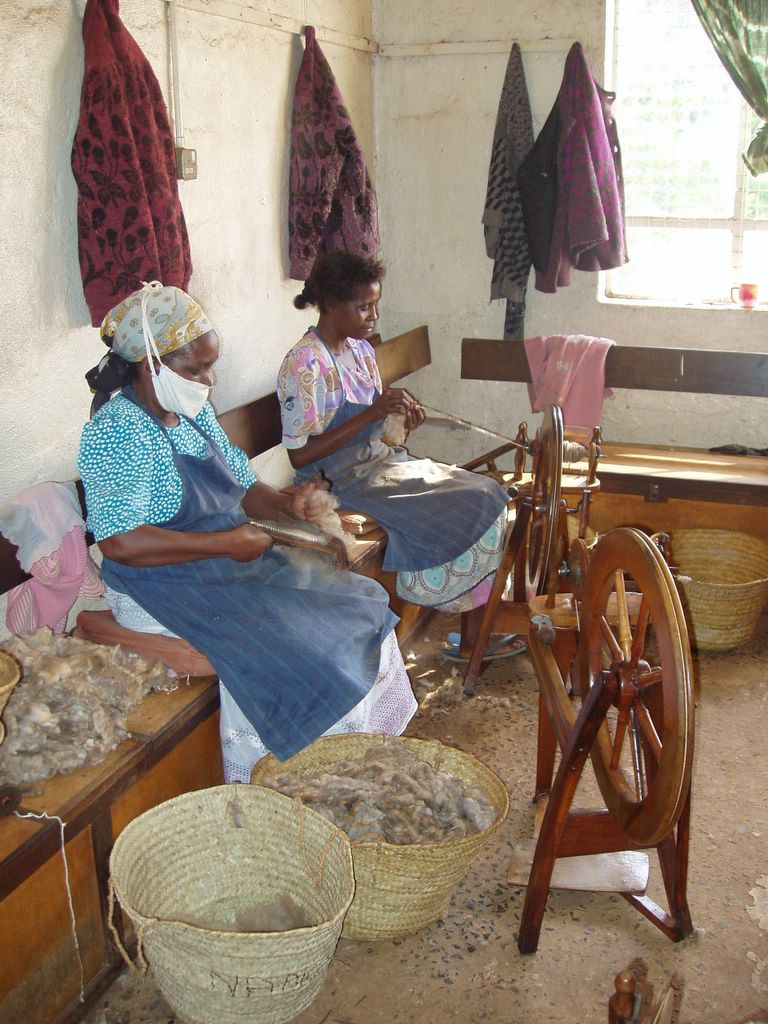
Carding wool at Makena Textile Workshop (Womens Project).

We ate lunch at the farm. Then some rested and repacked. Others went with Kathy to pay a courtesy call on the Mayor of Meru. They ended up chatting with the city manager who identified his greatest need to be a firetruck (they have a fire station but they don't have a truck.) Meru has a daytime population of 130,000 and a night time population of 70,000. The annual budget of the city is 50,000 Kenyan shillings.

NOTE: Our Vice Mayor (Kathy) said next time she would bring a small flag and/or a plaque and buisness cards of key administrators in her city so Meru officials could exchange emails.

A third group tooke a brief tour of the Kaage School for the Mentally Handicapped where they presented a gift bag.

In the late afternoon, we climbed into the vans once more for a visit to the Makena Textile Industry (Women's Weaving Project). We saw women carding wool, spinning wool, weaving wool (above picture), and even saw where they do the tye dye process. The had a small shop and most of us purchased an item or two - hot pads, purses and bags, stoles, blouses, shirts and dresses and even woven carpets.

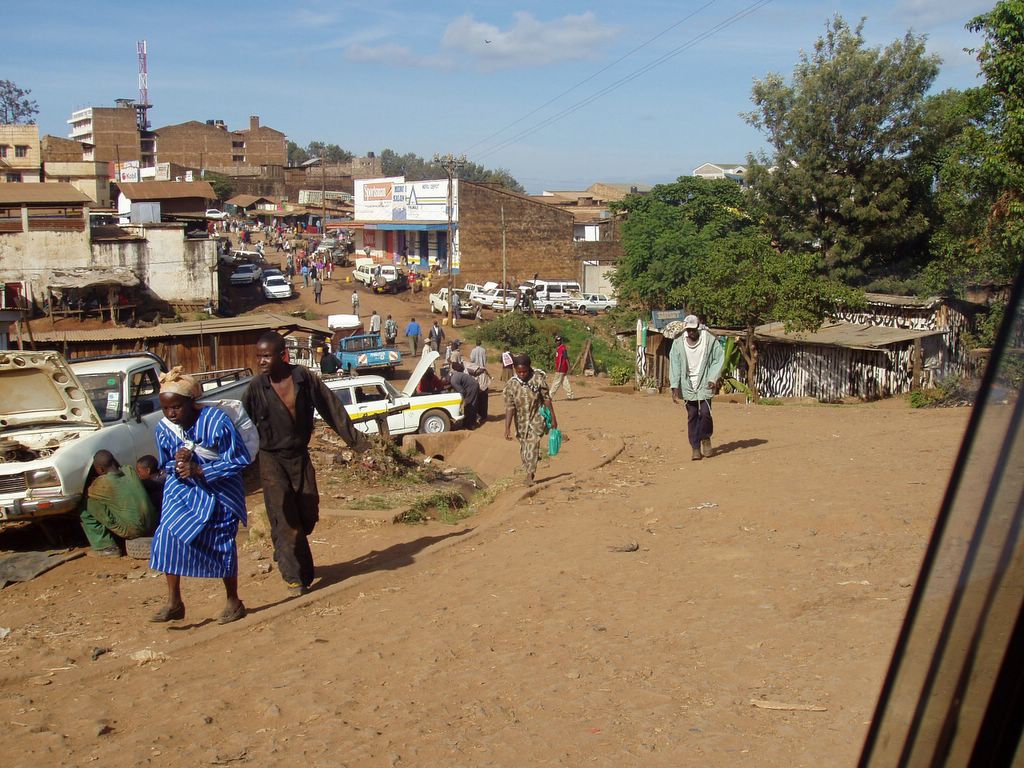
DRIVING TO WOMEN'S WEAVING PROJECT (MERU STREET)


KENYA METHODIST UNIVERSITY, MERU, KENYA


Following tea at the School for the Deaf, we drove to Kenya Methodist University where we met with the Vice Chancellor (a former cardiologist) and then had a walking tour of the campus. He noted that this school is a Christian college located in a rural area of Kenya. They school considers community service and employing women to be very important (to "empower homes").

This is a very young college but is growing fast. They have over 1200 students enrolled but only have housing for about 200.
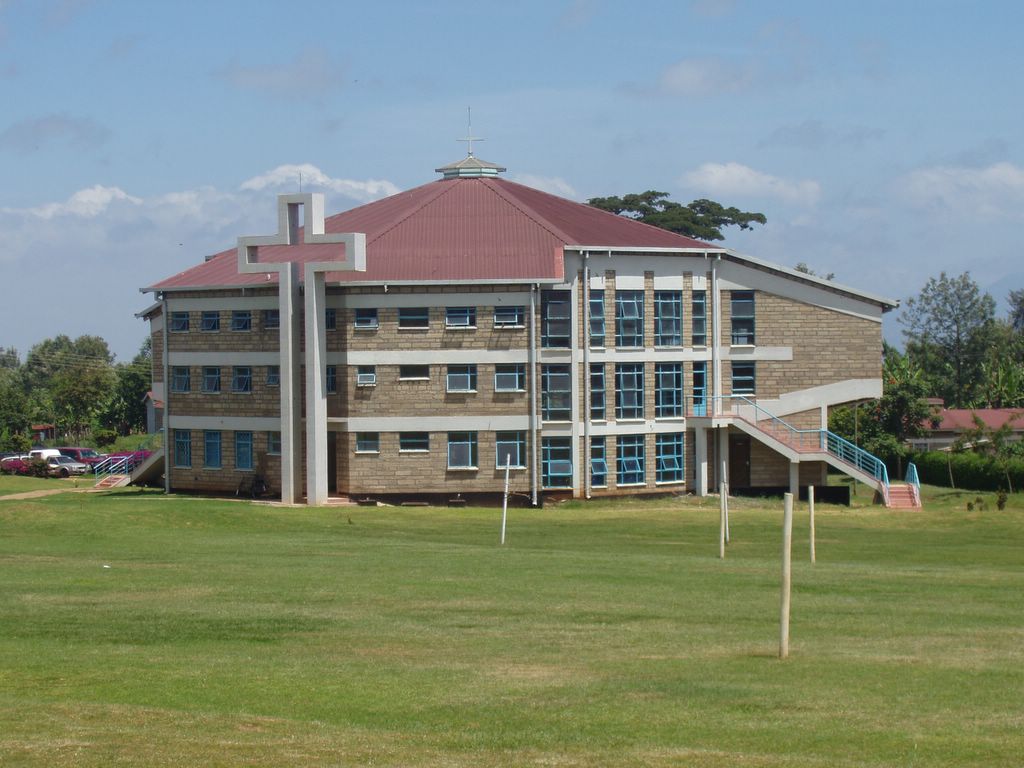
They have a beautiful new administration building, a fine library building that needs more books and a large chapel (can seat up to 1700 in a pinch).

The last building we visited housed the women's project which was started in the 1980's (before it was a college). The one story, two room building housed a kitchen and a "restaurant" that had just opened today! The curriculum is what we might call "culinary arts and restaurant administration."

Interesting note: The campus is lined with electric fencing along one side to keep the elephants off the campus grounds. We didn't see any but the campus abuts the route elephants take when moving between the grasslands and the forests of Mt Kenya.
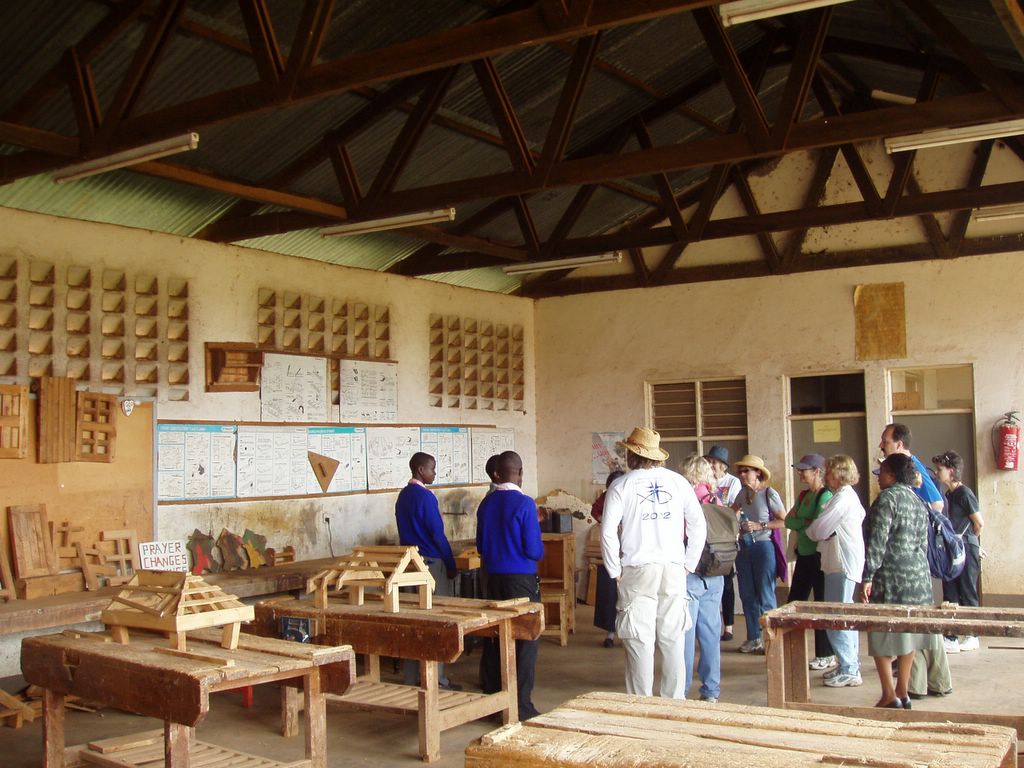
KAAGA SCHOOL FOR THE DEAF - CARPENTRY SHOP


Another VIM project might be to obtain additional tools for this shop. There were two table saws; otherwise the tools could all have been used by Joseph, father of Jesus. Maybe an appeal could be made to the Black & decker headquarters in Nairobi to donate some new planes and saws and files.

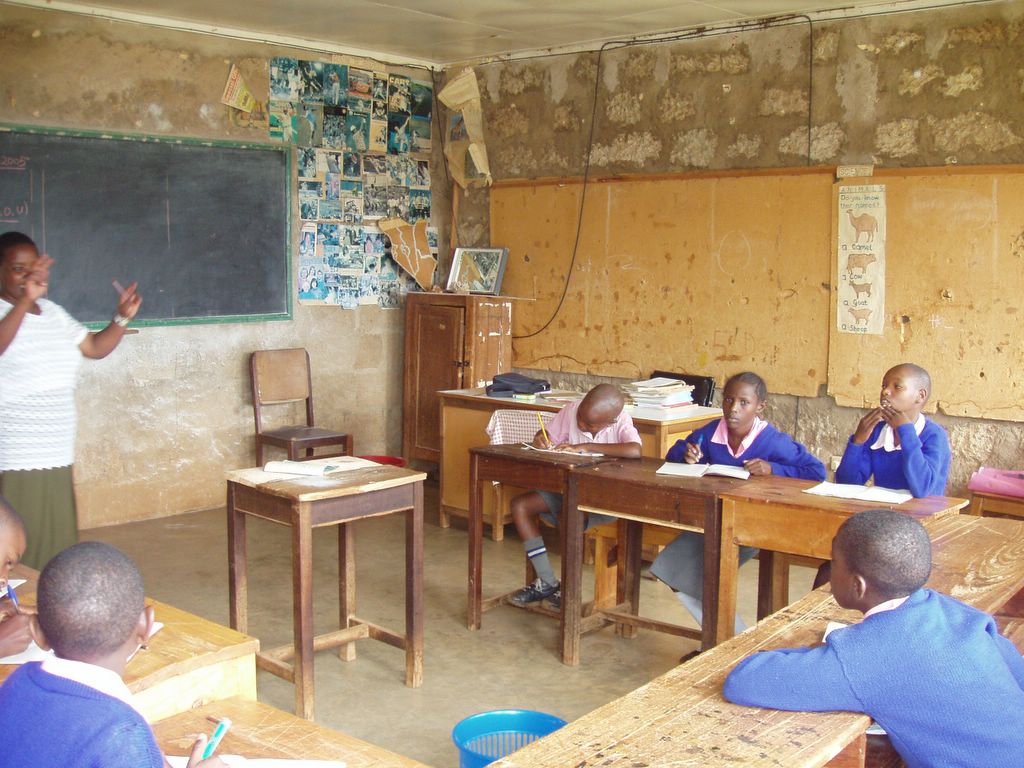
SCHOOL FOR THE DEAF - CLASSROOM VISIT


We visited a classroom to observe the children learning. This would make a great VIM project -- paint the walls and install new bulletin boards. Several ofthe students were wearing pretty ragged uniforms, too. But they were sweet and attentive and appreciative of our visit.

MON, JAN 17 - TOUR SCHOOL FOR THE DEAF


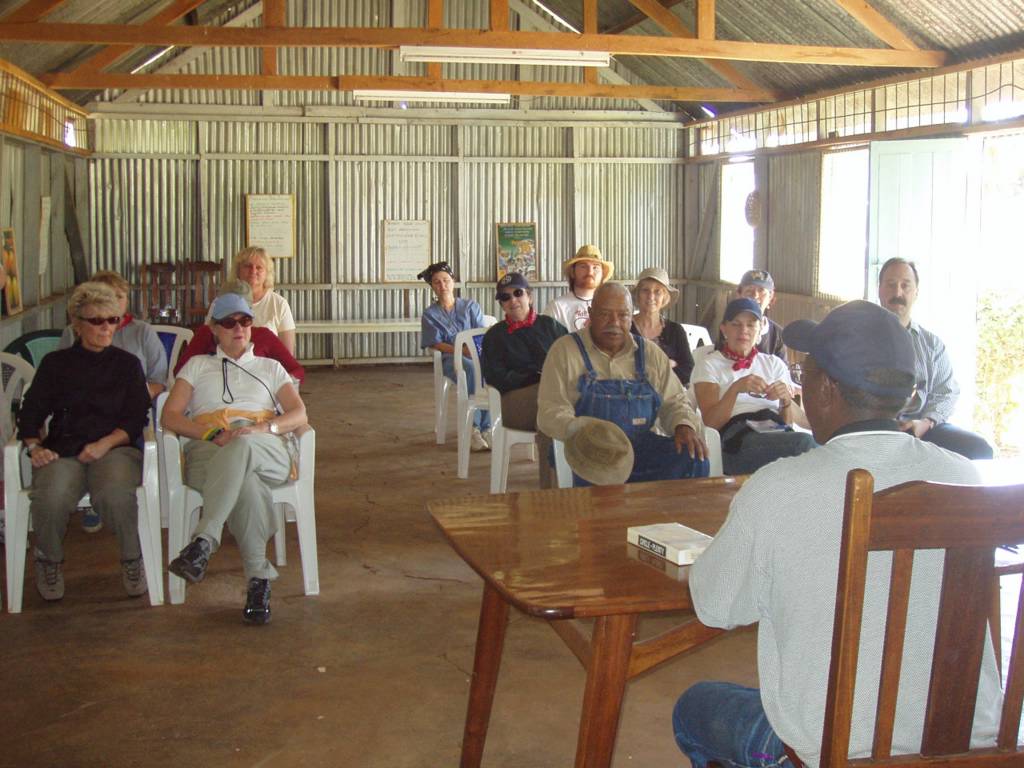
After regrouping at the farm, we walked over to the School for the Deaf for a tour of this program. They use American (rather than Kenyan) sign language here because so many of their staff have been trained in the United States. We met Rhonda, the head teacher and Alfred, the deputy superintendent who greeted us. Florence Mubichi is the one on the right in the picture. Students range from nursery to 22 year olds. They use the normal educational system. There are 3 high schools for the deaf in kenya; if a student doesn't make it into one of them, he or she may stay here and take vocational-technical classes.

The school was founded in 1965 by the Kenya Methodist Church. It started with 7 children and now has over 600 graduates and 165 currently enrolled. (The school was built for 120, so there is some congestion.)

Like most schools in Kenya, this is a boarding school. There is a stigma about having a deaf child in Kenya. Many cases of deafness can be attributed to malnutrician during pregnancy. Many students come from outside this part of Kenya. They go home to their families during the usual school breaks -- April, August and December.

The school dreams of having a library for deaf students, deaf adults and professionals working with the deaf. It would also be open to others in the area as well.

Sunday, January 16, 2005

PARTY AT MUBISHI'S


PARTY AT MUBISHI'S

At 5:30 PM, team members and our local hosts gathered at the Mubishi's home for a wonderful dinner and fellowship. We had traditional Kenyan food including delicious goat!

PARTY AT HOME OF STEVEN & FLORENCE MUBICHI


MUBISHI'S HOME

This evening we were guests of Steven and Florence Mubichi. Here is their lovely home in Meru.

KAAGA CHILDREN'S HOME


Kaaga Children's Home (Street Children Project)

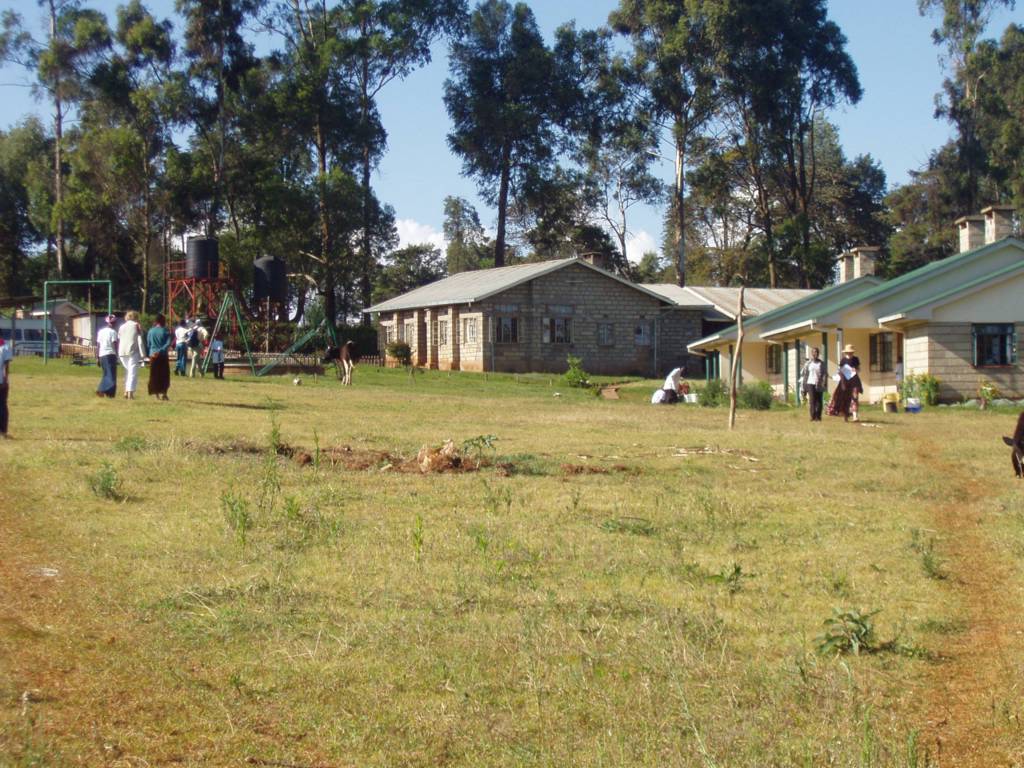
Sunday afternoon we toured this facility for very poor area children from 4 to 22 years of age. The children sang for us and we met the staff. Then students took us for a tour of their dormitory, the farm, other buildings.

This program started as a feeding program for the street children in Meru and grew until it was selected by the Kaaga Methodist Church.

According to ints director, the program has four dimensions: Spiritual (knowing God), Mental (intellectual growth), Physical (learning about personal hygiene, getting exercise, etc), and Social (learning to interact with others).

In addition, these children learn to manage cattle (there is a small "farm" on the property).

The program also feeds the homeless children in the community.

Many of the children served are orphans who had been living on the streets. Besides providing this "home," the church helps with the cost of their schooling.

SUNDAY, JAN 16 - COMBINED CHURCH SERVICE


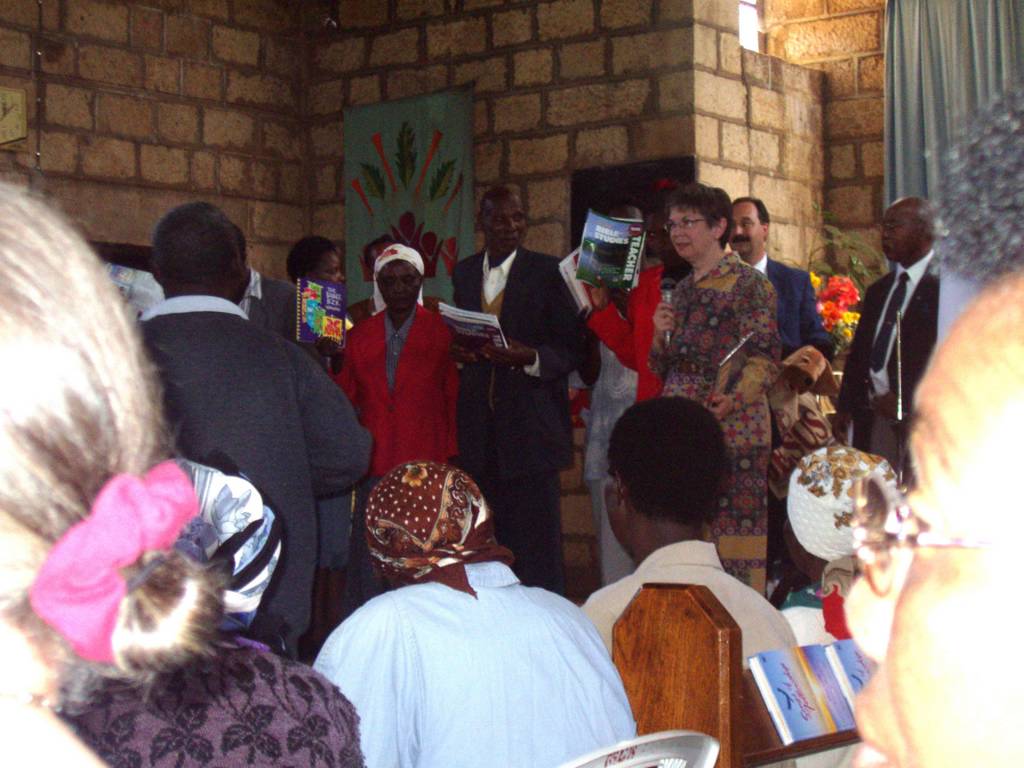
Rebecca delivers gifts during church service

What a wonderful day we had today. Following breakfast, our host families brought us to the Kaaga Church for a combined worship service. I am sad to tell you that there were so many people at the church today that many had to sit outside.

The tem members arrived early and got settled in the front pews. The church is quite lovely though a bit rustic as the congregation has left it exactly as it was when it was constructed in the 1940s. (They did add a cover at the back and a small vestry with a restroom.)

There are banners hanging on the walls which read "I am the vine, you are the branches. Abide in Me," "I will search for my sheep and look after them," Jesus - Light of the world," "Let us praise God's glory," and "Jesus, the best gift of all."

Virgie gave the first reading and the English choir sang. Then Barbara gave the second reading and the Ebachanezar choir sang. We observed a moment of silence for the Tsunami victims and two men sang. Then the English youth singers sang, Marshall gave the third reading, there were intercessionary prayers, the Church Chairman spoke, and we presented our gifts to the church (choir robes, Adult Sunday School materials, Children's Sunday School materials, Susan Lucky's final quilt, a contribution to the church of $1,000 and a greeting card signed by members of the Nichols Hills United Methodist Church).

Children from the School for the Deaf (which we tour tomorrow) presented an interpretive dance, children from the Kaaga Children’s Home which we toured this afternoon) danced, the offering was taken and Scott gave a wonderful sermon. And there was some more singing - -

The 3 1/2 hour service flew by and before we knew it we were all out on the lawn visiting and then in the Fellowship Hall enjoying a combination tea and lunch. The weather (as usual) was perfect. We were surrounded by flowers in bloom and brightly dressed members of the congregation. It was simply glorious.

KAAGA METHODIST CHURCH, MERU, KENYA


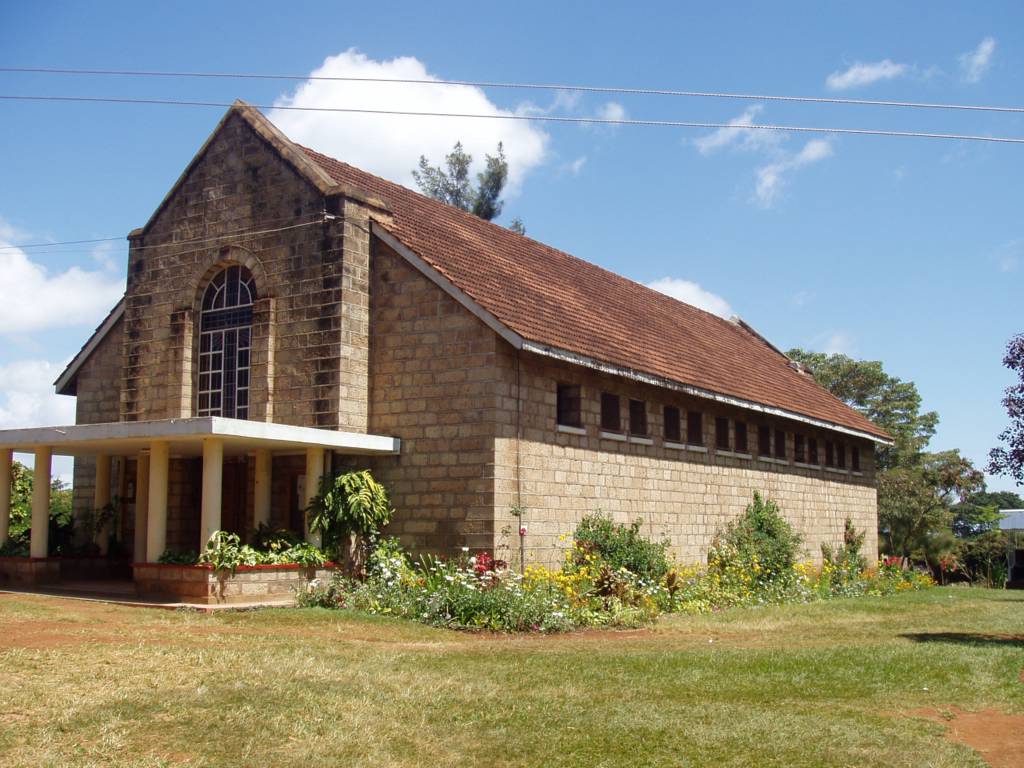
The Kaaga Methodist Church in Meru, Kenya is "the mother church of methodism in Kenya."

The plaque at the entrance of the Fellowship Hall reads, "Kaaga Pathfinder Memorial Hall. Built to the glory of God by both members of Kaaga Church and First United Methodist Church, Bartlesville, Oklahoma in loving memory of all the saints who live and die for the kingdom of God. Officially opened by Rev. Dr Ray Owen, Senior Minister, Bartlesville, Oklahoma, and Presiding Bishop Rev. Lawi Imathiu, Methodist Church in Kenya on July 20, 1986." The church is unchanged except for the covered entrance and rooms built to one side.


FROM REBECCA MORTON

Hi, all. Greetings from Kenya -- Jambo -- Hello. The weather here is so incredibly wonderful and the food is out of this world. Contrasting that with the poverty is difficult. The Kenyans are so very gracious providing us with tea every day at 10 am and 2 pm and various offerings of American, Italian, French and African dishes at the hotel in Naua. Smiles, smiles everywhere. We finally requested less meat, more African dishes. At the market place, we ask if we can bring the balance of what we owe later. They respond, "Akunashirda" -- "no problem."

Blessings,

Rebecca

Saturday, January 15, 2005

TEAM MEMBERS STAY WITH LOCAL FAMILIES


Waiting to be picked up

VIM team members were picked up at the Bio-Intensive Agricultural Center by host families. The eighteen members were divided amongst 9 local households -- all members of the Kaaga Church.

We had dinner at our host family's home and visited before retiring for the evening.

I am one of four members staying with Steven and Florence Mubichi. They have a beautiful home and we are very comfortable. After I finished posting to the weblog last night, I enjoyed a leisurely scrub in the tub with hot water and fluffy towels and a comfortable bed! Yeah.

It was fun to compare experiences with our fellow team members when we met back up this morning. Staying with host families is a wonderful way to learn how Kenyans live and think!

The Mubichis have a computer in their home and it is connected to the Internet (a real luxury in Kenya) which is how I am able to get this information posted to the weblog.

So, thank you, Florence and Steven!

WHO STAYED WITH WHOM:

Barbara and Cindy stayed with Mrs. Judith Mbobua
Virgie and Summer stayed with M&M Stanley Mwithimbu
Gay and Shirley stayed with Judy Kaburu
Rebecca and Jennifer M stayed with M&M Erastus
Darlene and Helen stayed with Doris Mwirichia
Alfred stayed with M&M Jonathan Muriungi
Beth stayed with M&M Jane Kirera
Scott, Sandra, Jennifer P and Jean stayed with Steven & Florence Mubichi

MARILYN BRENCHLEY'S KEMU COFFEE FARM


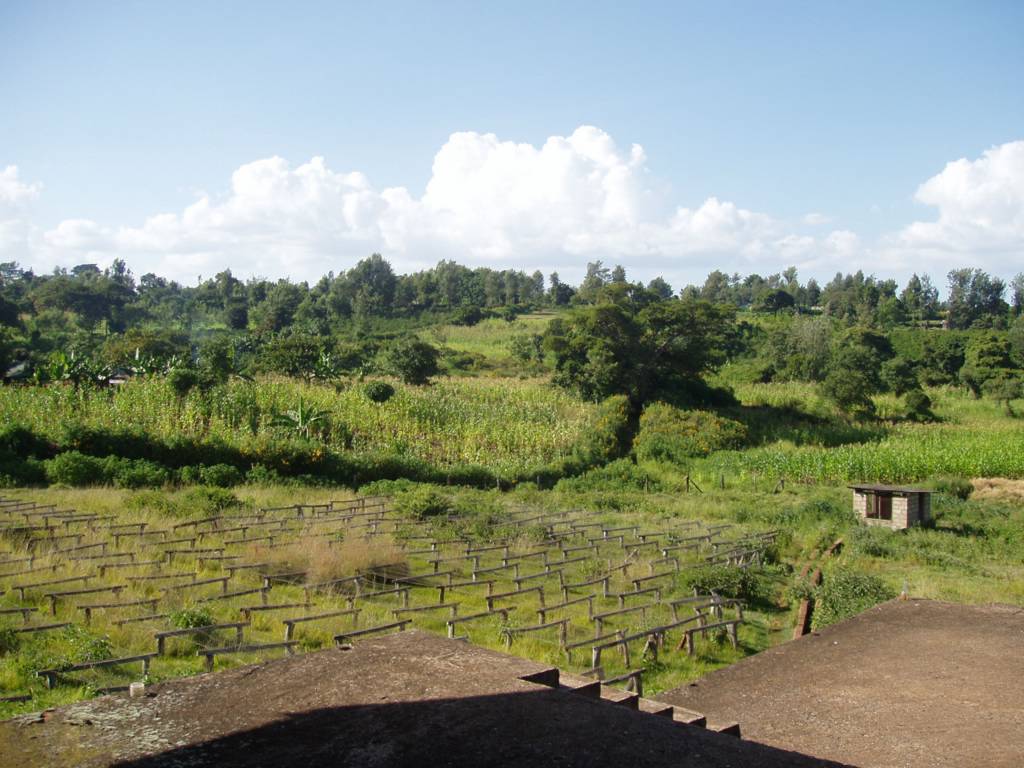
We drove in several cars out into the rural area around Meru where we met up with Marilyn Benchley - an American Methodist elder with the NW USA conference. She is from Richmond, Washington, USA.

Marilyn settled in Meru in 1990. Under her supervision, Kenya Methodist University (KEMU) has just purchased a coffee farm which we toured. She helped form the Kenya Methodist University Development Association which will process and sell the coffee (as well as the vegetables and fruits growing on the land) as a way to raise funds for KEMU.

KEMU previously was a vocational school but became a university 7 years ago. It started with 7 students and today has an enrollment of over 1,000 students.

The farm is 80 acres ands they took possession last September. It was rundown (all bush) and now it is beautiful They managed through donations to purchase a tractor. They have planted 1,400 trees and plan to plant 100 times that before they stop (this area used to be forest and has been cleared in recent years).

It will be a research facility for the undergraduate and graduate agriculture degree programs at KEMU. They have 20,000 coffee trees and we picked coffee beans and learned how coffee is made. There is a farm house that house 8 to 10 and will host VIM teams in future years.

MARILYN BRENCHLEY ON KEMU CAMPUS


Marilyn Brenchley showed by KEMU's coffee plantation, then had us to tea at herlovely home.

COMPASSION PROGRAM, KAAGA METHODIST CHURCH


On Saturday, we observed the Compassion Program which started with 110 children in 2000. They now have 403 children enrolled and another 300 graduates of the program.

The classes are held on the grounds of the church. The students wear uniforms (provided by the church) and sit in groups of up to 60. They are grouped by class level, sitting in plastic chairs in semi-circles. On the day we visited, they were perfectly behaved - quiet, attentive, polite. Tailoring classes for the older students were held in the fellowship hall.

This program is partially funded by Compassion International -- an NGA based in Colorado Springs, CO. Compassion International provides funding to cover operating costs but does not provide money to house the program.

The classes we met with were studying personal hygiene, religion, tailoring, embroidery, and more. After lunch, 5 little ones recited a poem about redemption through Jesus Christ, 18 sang a song, and 3 teenagers performed a dance to religious music. We were welcomed by the Chairwoman of the church and we were introduced to the many social workers who serve as instructors for this program.

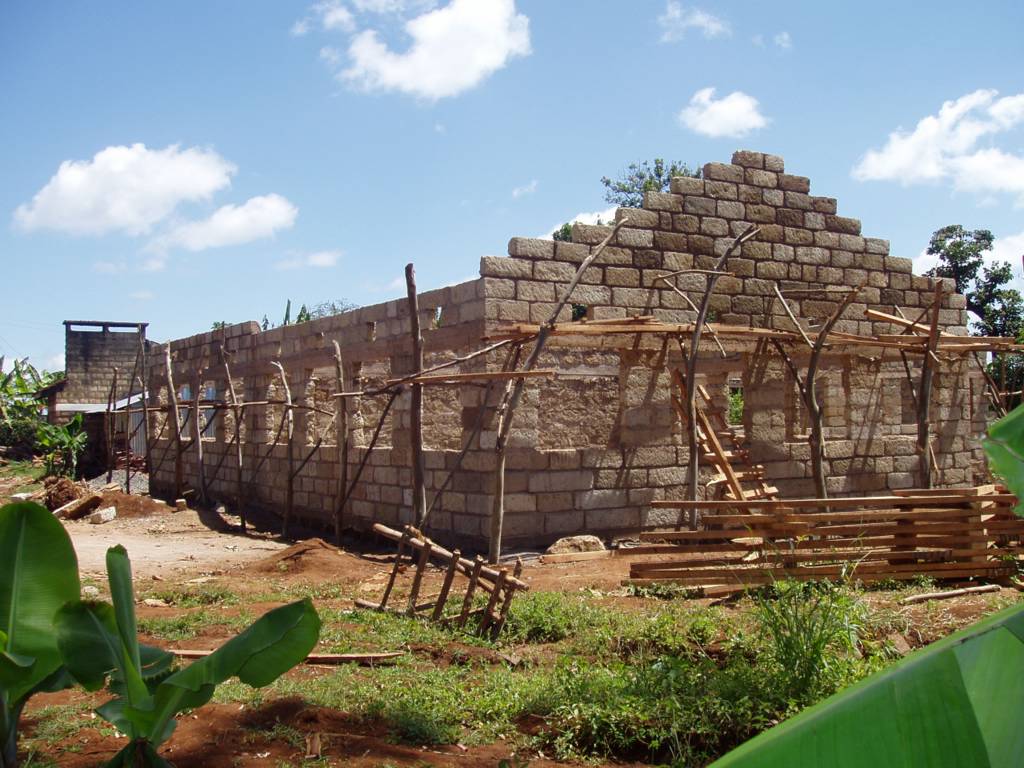
The church members have begun construction of a permanent facility that would hold classrooms, supply room, administrators' offices and a small kitchen and bathroom (see photo above). This would be a fun VIM project to work on and very gratifying as it touches so many deserving children.

PROSEPCTIVE VIM PROJECT IN MERU - THE FARM


VIM trip project - finish this conference room at the Bio-Intensive Center

ALFRED OPERATING WATER PUMP AT FARM


The faster you pump, the further out and the more water the above ground sprinkling system delivers.

SAT, JAN 15 - TOUR OF BIO-INTENSIVE AGRICULTURE CENTER, MERU, KENYA


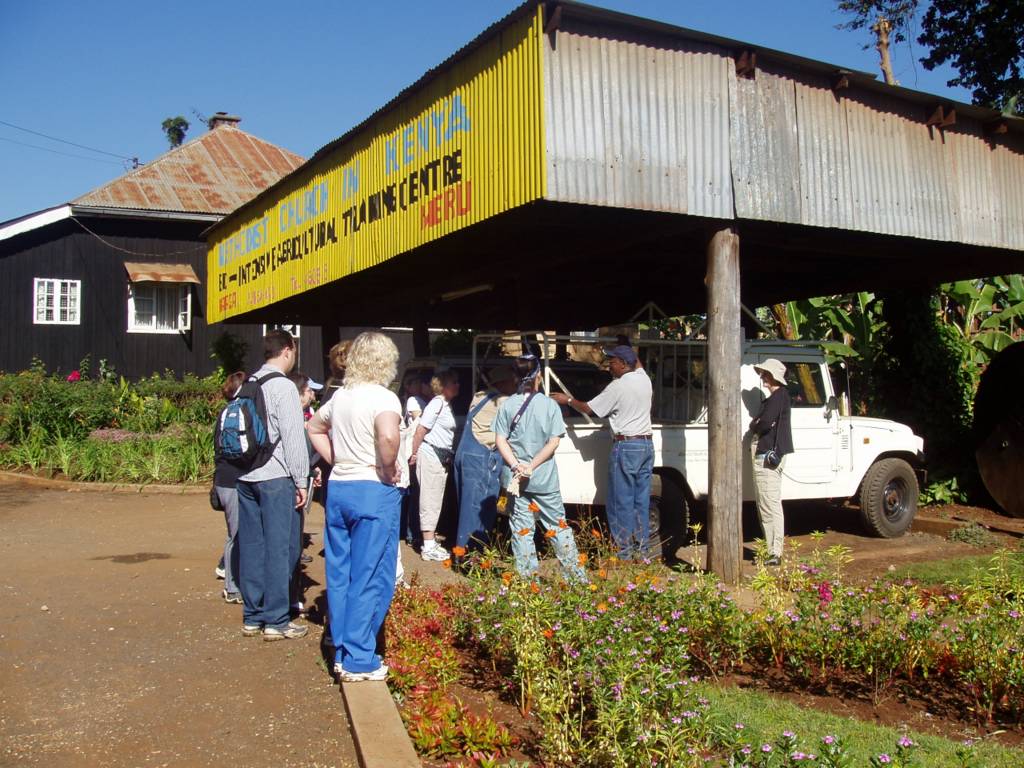
Bio-Intensive Agriculture Center, Meru, Kenya

Last night, after viewing the sacred lake, we returned to the farm where janet served us a delicious dinner, we sat on the veranda or out in the garden, admired the amazing stars and - for some of us at least - truly relaxed for the first time since we hit Kenya. This area is so lush and the farm is beautifully kept.

Then we retired for the evening - the 15 women slept in one big open dormitory and the three men slept in the other. John has dreams of installing partitions in the dorms to give a little privacy and inproving the showers (PLEASE!) and the toilet area. Using the bathroom in the night entails a trip (so now we know why they said to bring a flashlight!) down past the cow shed. We are definately not in Kansas, Dorothey!

Our intinerary permitted us to sleep late (8 am versus 5:30 -- THANK YOU, Florence!!!) and Janet had a lovely breakfast waiting for us. Around 9:30 am, John took us for a teaching tour of the farm.
Here is a link to the General Board of Global Ministries description about this program. The Advanced Special I THINKis #014217-2RA.

The farm was established by the first Methodist missionaries who came to Kenya in 1862. The ruler of the country at the time gave them this land. The main building was built in 1919 and used to be a school. It was converted to a farm in 1992. The canopy over the stairs (and across the veranda??) was added in 2003 by a VIM team!

Missionaries started spreading the Gospel and also sartede up girls schools and boys schools and churches (until then, no one here went to school). There is a second house on the property that was built later; a British lady is living there but she was away during our visit.

This 2 acre facility is a totally organic demonstration farm. Students come to the farm to learn and john also goes out into the area to teach. (John feels that improving the dormitories and showers would attract more students to the farm; I have to agree!)

The corn here is 9-12 feet high; in fact, everything is huge and lush and delicious (our lunch came from the gardens)!

John's mission is to teach farmers how to get greater yield from their land. He also provides training on nutrition and HIV/AIDS. Ninety percent of those who come for training are women. The first year he was here, he had 500 come, the next year 780, then 970, 1070 in 2003 and 1,200 were trained in 2004.

He teaches about crop rotation,

Like an American USDA Agricultural Extension agent, he also introduces improved strains of plants to farmers in the region. For instance, he showed us a very fast growing form of South African Eucalyptus tree that goes 24 feet tall in two years when it can be harvested; it doesn't require lots of water, it is self pruning, and it is fast growing. It can be used to make medicine and organic sprays for crops.

We saw a nifty hay stall built by a VIM team from Texas for "zero grazing" (no free range); the cow stalls were spotless with a sleeping area and a separate feeding area. The area is cleaned twice a day and the maure goes into a compost pile (as does everything on the farm. In fact, if you weren't composting before you saw this place, you left a believer! We met the milk cows - Betty, Susan and Carrie. They grow and harbvest napier grass (which they chop up and feed to the livestock).

While I am thinking about it, we would all like to thank the VIM team from Texas who laid the concrete walkways throughout the complex. THANK YOU!

The dorms were built in 1930 when the facility was a girls school. we saw a water pump designed like a "Stairmaster;" Alfred tried it out and it worked well -- you just have to keep up the pace if you want the sprinkling system to water your crops at full force! Go, Alfred, go!

Because of the composting (and double digging to enrich the soil, John practices "intensive farming" ; where normally corn would be planed 2 feet apart, he plants 5 in a 2' by 2' area.

There are stalls for calves and goats and vertical vegetable gardens that Satterleys Nursery in Oklahoma City would be proud of.

We went into a new building built be a Texas VIM team that includes a kitchen, dining area and a conference/classroom. He currently puts 100 people into the calssroom but it is unfinished and gets hot. It needs a ceiling, windows on the back side for cross ventilation, plywood for the walls, etc. And he needs lots more chairs. Infact, he left us with a booklet outlining needs at the farm And, I have to say, a VIM trip to this farm alone would be divine and the work needs to be done and the whole effort is doing a great amount of good for the area. Except maybe that part about starting to do bee-keeping; not sure I'm into bees myself. So - Hurrah for John and Janet and this beautiful place!

By the way, if you want to make a small contribution, send John money for twin bed sized sheets. What WERE those things we slept on, anyway? They felt like polyester bedspread material. Sorry to gripe, john, but the sheets (and the one working shower - but Marshall took care of that) were the only at this lovely facility.

ABOUT MERU, KENYA


Meru is located on the Northeast slopes of Mount Kenya about five miles north of the equator; the altitude in Meru is approximately 5,000 feet.

Have you discovered Wikipedia yet? It is a great online encyclodepia - of sorts. It depends on folks like you and me submitting information. Here is the link to their description of Meru.

According to http://www.kenya-travel-safari.com/kenya-travel-destinations/meru-travel-kenya-tourism.html/, Meru is a bustling business, agricultural and educational center for the entire northeast of Kenya. It has three or four banks and numerous hotels, markets and transportation terminals. Coffee, tea, timber, cattle and all other manner of products are produced in Meru. It is located in an area of mixed forest and clearings, with smaller towns and villages, and rural farms surrounding it.

Major attractions in Meru include the municipal market featuring stalls selling baskets, clothes, domestic utensils, agricultural produce and more (especially popular are the small fruit shops selling custard apples and miraa) and the Meru Museum in the oldest stone building in town. The museum is comparatively small but very engaging with ethnographic exhibits, pick-up-and-feel blocks of fossilized wood, and stone tools from the Lewa Downs prehistoric site. By the museum is a place to buy herbal pharmacopoeia and a pool featuring crocodile, turtles and tortoises.


Posted by Hello

Friday, January 14, 2005

NOTE FROM SHIRLEY

Thank you family for the emails and prayers.

I worked in surgery and surgery ward at the hospital.

Equipment, beds, medical supplies, etc are 1950's or older.

We have moved to Meru and are working on the Methodist farm.

Happy one month to little Davis.

Love and prayers,

Shirley

MONKEYS ALONG THE SIDE OF THE ROAD


Monkeys, Meru, Kenya

Driving back from the Sacred Lake, we encounterd about 10 monkeys along the side of the road outside meru - another first for the team.

FETCHING WATER FROM SACRED LAKE, MERU


Fetching water at Sacred Lake, Meru, Kenya

All the time we were at the lake, women and children were traversing the steep ravine in search of water. They carried plastic 20-liter bottles on their backs. Some small boys came with a donkey to carry the water jugs.

LAKE NKUNGA CONSERVATION EFFORT


Sacred Lake, outskirts of Meru, Kenya

We drove out away from Meru to view Lake Nkunga and meet with a group of local citizens who are concerned that this historic site is becoming over grown and endangered.

The lake sits on 100 acres of land which has been set aside because it is the only route or corridor available to elephants when they migrate each year from Mount Kenya out to the grasslands; this is also the area where elephants mate each year.

Until 1963, the lake was very clear and pure but since then it has become contaminated.

This is a beautiful forest but the trees are getting cut down because it is not guarded or managed. There are no forests north of here in all of Africa.

The citizens' group wants to conserve this ecosystem, remove the grass that has grown up in the lake, maintain the forests (which are being depleted), and possibly eventually develop the area for tourism. They think a high quality hotel or set of cottages could be constructed where tourists could observe the elephants and other animals and appreciate the restful setting.

This is called a "sacred" lake because people used to worship big trees and mountains as symbols of "the god of the unknown."

There is a very long, very steep path that leads down to the lake. Throughout our visit, this path was actively in use by women and children climbing down to fill their 20 liter plastic water jugs.

The rural community depends on the lake and its springs as it is the only water source at present. In order to presenve the lake and surrounding area, the members of the Lake Nkunga Conservation Group want an alternative water source for the area communities developed. They have identified a site where they want to drill a bore hole.

ARRIVAL IN MERU, KENYA


The garden at the farm (a little piece of paradise)

Our vans delivered us to the Bio-Intensive Agricultural Training Center where we met up with Florence Mubichi. Florence had prepared our itinerary for the time we will spend in Meru. (I get the impression everyone in town lobbied her to be added to the agenda -- and EVERYONE wanted us for tea!)

We met JohnMwalimu, the director of the facility (which is referred to as "the farm"), and his lovely wife Janet. Then we headed out to see the "sacred lake" (see posting above).

GRASSROOTS EFFORTS TO HELP AIDS VICTIMS


We also toured several self-help projects in nearby Machungulu, Kenya.

We visited women with AIDS and heard about an AIDS widows group composed of 150 women who had lost their spouse to AIDS. This group arranges for widows to receive micro-lending loans to earn money. They also care for over 300 AIDS orphans.

We drove past their elementary school -- hundreds of children playing in the long grass laughing and waving. We were met by women siging a welcome song; then walked through their weekly medical clinic and then met in their church.

All of these projects are owned and run by the community. The Maua Methodist Hospital provides assistance and more information can be obtained from the Machungulu Palliative Care Project, PO Box 172 60600, Maua, Meru North, Kenya.

These programs were the brainchild of missionaries Dr. Dietmar Zieglar and his wife, Sr Brigit Zieglar who were tragicallykilled in an automobile accident in Kenya.

The clinic obtains and provided AIDS drugs at a very reduced price. They have a small car provided by a grant from the Diana Fund. They can screen for HIV and provide results in 17 hours.

They also hand out clothing that is donated by individuals in the community.

They are currently building a daycare facility which will house classrooms, administistrative offices, a community credit union, a fellowship hall, a kitchen and the clinic. All of this is paid for by "fair trade" products" and all is organized by the methodist Church in Kenya.

When this started, no one would talk about AIDS. Now everyone wears an AIDS pin. They were burying at least one AIDS victim a week which is no longer the case. Their next goals are to continue to fight the stigma of HIV, make their volunteer effort sustainable, maintain their current standards and start a food bank.

We asked, "Is this program unique?" They said, "Yes. Others look to outsiders for help. This is the only one we know of in Africa that is a self help, community based, grassroots effort. There are lots of African groups now coming to see this project. We are also making presentation about our projects outside Africa."

We were told that it costs about 1,000 Kenyan shillings to build "one rafter" in the new building. Everyone on the team was so moved that we each made a contribution towards the effort.

Afterwards, we had lunch for the final time at the Maua Methodist Church and were driven to our hotel. We loaded up our luggage and headed for Meru.

FRI, JAN 14 - TOURED AIDS HOMES IN MAUA AREA


AIDS home; Left side=new home; Right side=previous home

On Friday morning, we attended chapel service and then rode in vans to view some of the homes the community has built for very poor people with AIDS and for families where the parents have died from AIDS.

These houses follow a standard design. It is one room (two if there are both boys and girls in the family). It is wood framed so it is easier for women VIM team members to construct than are the cinder block homes we have helped build in Mexico.

In the picture above, the new house is on the left and the original dwelling is on the right. Many original homes were mud huts - like the sod homes Okahoma settlers lived in prior to Oklahoma's statehood!

WE MEET PEACE CORPS VOLUNTEER JAMES MIRKES


(L to R) Scott, Jennifer P, Summer, Beth and James Mirkes

As we were getting ready to view AIDS homes, we spotted a young Caucasian approaching our van. He introduced himself as Jarrett "James" Mirkes, a Peace Corps volunteer in Maua.

We talked him into going with us on our tour of the area and we had a great chance to visit and learn about his program.

James is from Lake Geneva, Wisconsin and a graduate of Big Foot High School. His college degree is in computer technology and he worked for a large bank for four years after college before joining the Peace Corps.

He helps install and maintain computers in area schools as well as train students to use computers. The program is tied to an NGO -- Computers for Schools, Kenya.

He said the popular television programs around here are "The Bold and the Beautiful," "E.R.," W.W.W.(wrestling), the BBC, and Walker - Texas Ranger.

Thursday, January 13, 2005

POSTINGS FROM THE FIELD

METHODIST IMPACT ON MAUA

Having this wonderful Methodist hospital here benefits Maua in many ways. It is a big employer and a good corporate citizen. It provides a remarkable and much needed service. And the love of God is reflected in all of the things done here

BLOOD DONORS

The hospital's supply of blood was exhausted when we arrived. Two VIM team members gave blood while one of our nurses looked on. She reported that the procedure was very safe and "according to protocol." While in the lab, they got to view malaria on a slide.

NIGHT NOISE

Kathy and Beth were awoken one night by the loud thumping sounds on their roof. In the morning, they learned it was just a domestic cat -- not a raccoon or a tiger.

POSTINGS + COMMENTS FROM "Report #2 via the mission field"

CORRECTION

I previously reported that we had two elders and two deacons. It turns out that Marshall isn’t a deacon. He is studying to become an elder and is currently a youth minister at Blanchard UMC.

VIM CHAPEL, THURSDAY, JANUARY 13

The VIM Team presented the morning chapel service on Thursday, January 13. Scott gave the sermon after Alfred presented a book and the second of Susan Lucky’s beautiful quilts to the hospital. Virgie led prayer, Marshall and Sandra read Scripture, and Rebecca closed with their traditional benediction.

KATHY’S POSTING

Walking the crowded pediatric ward for the third day in a row has been jarring to the senses as well as to the heart.

A sea of young mothers lie in their beds, cradling sick babies in their arms. As they nurse their offspring, they chat among themselves and hope for a cure -- or sometimes only relief from -- the malaria, HIV, mal nutrition, tuberculosis, epileptic seizures from which so many suffer.

Young babies who resemble frames of infants and toddlers still at the breast are weak.

A few of the children are 5 or 6 years old. They sometimes smile with curiosity. Some mothers hesitatingly smile. Not many grin and some stare hopelessly with disdain or worry. One child I had seen only yesterday died during the night of pneumonia.

The beauty in this room of 30 women and 30 children is that the mothers and their sons and daughters eat, sleep, grieve, laugh, and cry together.

Please pray for them.

JENNIFER M’S POSTING

Hey, people. I’m here in Kenya working at the Methodist hospital. I am so tired but I have been getting more sleep here than I ever do at home. I am in bed by eight every night, Kenya believe it! I am currently working on a mural for the children’s wing of the hospital which is super fun. We are very limited on supplies so we have to be pretty creative. Well, I’d better go. I miss you all terribly. Take care of each other. Make it a great day.

BARB’S POSTING

Wednesday in Maua. During lunch with the hospital administrators, the term “yellow people” was heard. After further discussion, we learned that when Cindy, Jennifer, Kathy and I visited the neighboring town of Munchungulu, that was our description. Now we were rather conspicuous – all very white and blond – walking through a sea of hundreds of men, wrapping, trading and chewing “mirra.”

We had heard that in this area, the economy somewhat thrives on mirra – not illegal but clearly an amphetamine.

It is amazing to us what a “shopping center” looks like in Kenya.

GAY ON THE FOOD

“Best avocados I have ever tasted!”

FROM DARLENE

Ron, Michelle, Pearl – Darlene says, “Hi.”


DINNER AT GITANI'S + MATATU RIDE HOME


Stanley Gitani and Jennifer P

On Thursday night, we had dinner at the home of Stanley Gitari who is head of the Methodist Community Health Center (which includes the Palliative Care Program and the AIDS Education Program).

Stanley, his wife Mary, and their son live in a nice house on the hospital compound. It was a fun evening with good food and a chance to visit with a number of his friends.

After dinner (around 9:45 pm), Stanley and about eight of his friends attempted to walk us back to the hotel. It was very dark because there are no street lights in Maua. Nevertheless, the streets were quite active.

About a third of the way home, some of the men on the street began to gather around us. There was a little jossling (a man muttered Ali be praised in my ear).

One of our escorts turned back and fetched a local taxi. These are small trucks with a shell on the back and benches running the length of the bed on either side. I don't know how to spell it but it sounds like ma-ta'-tu.

Stanley and his friends formed a circle around us as we quickly clambered into the truck. Another of his friends arrived on a motorcycle and he followed us all the way back to the hotel just to be sure we arrived safely.

MORAL TO STORY: Mzungus (white people) should never walk the streets of Maua after dark. Related to the above, here is a somewhat facetious list of tips for getting around in neighboring Tanzania that probably applies to Kenya as well.

VISIT TO THE NURSING SCHOOL


The Nursing School - When we finished our project on Thursday, we all walked over to the Nursing School on the hopsital grounds and poked our heads into Florence Mubichi's classroom. Our two nurses, Darlene and Shirley, said a few words and encouraged the students to "STAY IN SCHOOL." Then we saw the faculty offices and chatted briefly with them.

ALPHABET MURAL


Darlene is saying. "Now, it isn't quite finished!"

NUMBERS MURAL


Adding final details to the numbers mural are Summer, Jennifer M and Scott.

MURAL IN COMMUNITY HEALTH BUILDING


Mural in Community Health Division, Maua

When Stanley Gitani learned Cindy was doing a mural, he asked her to do one in his facility, too.

We each signed a "leaf" (hand print). Here Kathy is beaming as we record the project. It was in a hallway so it was hard to photograph. :-)

PAINTED NOAH'S ARK MURAL


Noah's Ark Mural, Maua Methodist Hospital

This was taken just as we finished up on our final day.

WHAT WE DID AT THE HOSPITAL


In the children’s ward (which holds 60 beds), we renovated half the ward.

This included removing the mold from the ceiling and painting the ceiling. This was done by Kenyan workers thankfully.

All window frames were painted inside and out and Jean and Gay, with help from others, led the effort to thoroughly clean most of the window panes so that you don’t even know that there is glass there!

All the walls have been painted cream from the waist up and turquoise on the bottom half; Jennifer P, Helen, Virgie, Alfred and others lent a hand.

Some of the cement flooring was chipped out by Scott and Marshall and Kenyan workers and new cement will be poured after we leave.

In the ward, murals were painted on several walls depicting 1) Noah’s Ark, 2) A,B,Cs and 3) numbers (spelled out in Swahili). In the Community Health Building a mural was painted of the Tree of Life. It looks like an African tree (flat on top). The “leaves” are hand prints which we will each sign. Behind and around the tree trunk are maps of Africa and Oklahoma (with an oil well and other symbols in it)! Cindy drew all the murals and Summer, Darlene, Jennifer M, Sandy and Barb plus others filled in the colors.

Also (and perhaps the most remarkable part of the job), all of the wooden furniture was painted turquoise and all of the metal beds were washed and then painted with two coats of cream colored paint. The wooden furniture was Beth’s pet project and Kathy led the renovation of the beds.

PURCHASED NEW MATTRESSES FOR THE BEDS


New mattresses arrive

With Kathy as our spokesperson, the hospital agreed to let us purchase from a store in Maua new mattresses for 30 of the beds in the children’s ward. In addition we are purchasing pillows and blankets for all the freshly painted beds.

Wednesday, January 12, 2005

FAREWELL DINNER AT MAUA BASIN HOTEL

Wednesday night we ate our final supper at the hotel. They served vegetable spring rolls, "fan of avocado sunrise," cream of tomato soup, beef stroganoff, African yam stew, poached pumpkins, steamed rice, parsleyed potatoes, mixed vegetables, cabbage and carrots, and, for onf first dessert, Nyabene crepes and home made ice cream. We had told the chef several people on our team were vegetarians and they did a great job of offering lots of meatless choices.

After dinner, they turned the lights low and the chef came out carrying a cake with lit candles and sparklers. Four servers followed him out, each carrying a flaming torch. The words on top of the cake read, "Asanteni Kwakua Nasi Karibuni Tena" which (I am told) means "Thank you for being with us. Welcome again."

BUYING FROM JOHN


Alfred shopping at John's stall in Maua as he dodges a passing cow.

THE LOCAL DRUG PROBLEM - MIRRA (AKA KHAT)


This is a picture of a man in Maua, Kenya who was harrassing Scott as we walked home to the hotel. He was barefoot and filthy and (according to Steven Mubichi) a little crazy. He was also carrying a packet of mirra in his left hand (also known as Khat) and seemed pretty spaced out. He berated us in Swahili the whole time.

Khat ( Catha Edulis) is an evergreen shrub/tree and grows to about four metres high. The best Khat is grown in the mountain areas of Kenya and Ethiopia. The main active ingredient in the plant includes Cathinone which acts as a stimulant, to the central nervous system in a way similar to amphetamine.

Khat is traditional to North East African countries such as Somalia, Djibouti, Saudi Arabia and Yemen, and has a long history of use in these regions. It's social acceptance is such that it can be compared to the use of tea and coffee in Western society. It is also known as 'mirra'.

Source. http://www.ndp.govt.nz/media/2000/customs22mar2000.html

Also see http://www.a1b2c3.com/drugs/khat1.htm and http://www.geocities.com/forceps1974/khat.html
for discussion of Khat (aka “mirra”).

WEDN, JAN 12 - LUNCH WITH ADMINISTRATORS


Key hospital administrators hosted the team for a lunch featuring traditional Kenyan foods. There were speeches and expressions of appreciation and much good fellowship.

Kathy reviewed the gifts we had brought including medical supplies, eye glasses, books, bedding, and food, toys and clothing for palliative care patients. The chaplain noted that our being here is a loving action and asked us to take greeting to the US and to come again.

The hospital administrator mentioned some other ways to help the hospital including cash donations to their Advanced Special account with the General Board of Global Ministries, donation of “outdated” equipment from America – especially they desire an autoclave and an oxygen system for their hospital, and to encourage other VIM teams to visit this lovely facility.

Tuesday, January 11, 2005

HOSPITAL POSTERS


CANDID DISCUSSION WITH DR PAUL McMASTERS


Dr. Paul McMasters visits with VIM team members

At our request, the staff set up a time for our team to visit with Dr. Paul McMasters, a British surgeon volunteering at the hospital for a few months. He usually works in Uganda but felt called to Maua this year.

He filled us in on some of the area customs like "cutting" as an act of retribution, female circumcision, polygamy and the use of mirra (a plant grown around here that has the effect of an amphetamine). He also talked about the many improvements that the hospital has made and is making.

He told us that this is actually a relatively affluent part of Kenya but only about 10% of Kenyans are rich and the balance are poor. Still, life expectancy is only about 40 years because so many die from AIDS.

There seems to be considerable fighting between tribes in this area. If you poach, they cut the offenders tendons in the arm and/or leg as punishment. They use a large machete like knife called a panga. Women get cut as well as men.

Domestic violence, according to Dr. McMasters, is prevelant; last week he saw a women with a spear in her back (placed there by her husband).

The drug mirra is grown in this area - especailly during and right after the rainy seasons. It suppresses the appetite. Traditionally it was used only be men, However, during the recent droughts, women started using it as well to dampen hunger pains.

McMasters said that across Africa women are treated poorly. Their hemoglobin is at 50%, they have worms, and there is great malnutrition. A woman's dowery is 13 cows because she is expected to raise 13 sons (and each will need a cow). The first wife often chooses the 2nd wife and is grateful for the help.

A huge improvement has been introduction of plastic 20 liter jugs which have replaced the old clay jars women once used to fetch water. Now, because of the lighter weight container, small children can fetch water, too.

The doctor was especially impressed that this hospital is offering a family planning program; he said he had not seen anything like in in Africa.

He urged us to support the United Nations. They are "on the ground" in Africa and are doing good and are perceived as neutral (unlike the Americans and the British).

ELECTRICAL, PLUMBING, & CARPENTRY SKILLS


Marshall wiring an incubator

In addition to renovating the ward, Marshall and Gay brought electrical, plumbing and carpentry skills to the team. Several incubators that were built on site were wired by Marshall. Also, the holes in the screens in the Children’s Ward were repaired.

OUR "RIGHT HAND" DORIS KUNGANIA


Doris Kungania (left)

Doris, our liaison, was wonderfully helpful. We only had to ask once and within a few minutes she was back with the requested item or piece of information.

TUESDAY, JAN 11 - MAUA, KENYA


This is the view from in front of our hotel, looking away from town, at 6 am.

We rose early and, following breakfast at the hotel, we walked in our three teams to the hospital grounds for 8 am chapel. Then we set about our work.

Monday, January 10, 2005

WHAT COMES NEXT AND COMMENTS FROM "Report #1 via the mission field"

WHAT COMES NEXT

I have typed this email straight through morning tea break but I want to take a minute more to tell you what comes next.

We hope to have the entire children's ward painted and put back together by 4 pm Thursday although it may be some time before the new floor gets poured. Marshall is busy today installing three electric hand dryers in the hospital (a first for Marshall and the hospital both).

On Friday, we will walk to the hospital and be driven in hospital vans to a nearby village where we will get a tour of what I call the AIDS orphanage. (I think it is called New Life Church but we will find out soon enough! We aren’t sure whether or not there are children living there yet but will let you know.)

That afternoon, the hopsital's vans will drive us to Meru which I think is a one hour drive. We will go directly to the Bio-Intensive Agricultural Center in Meru where there is a dormitory. We will sleep there Friday night and work at the farm Saturday. Then, with Florence and Steven Mubichi, we will tour several institutions in Meru.

On Saturday night, leaders in Florence and Steven’s church will host us in their homes and on Sunday morning, they will bring us to church service. They are having a combined service and Scott will give the sermon. We have two elders and two deacons on our VIM team and I expect they will all play a role in the service. We will also present the final quilt made by Susan Lucky at that church service.

Sunday evening, there will be a dinner in our honor at the home of Florence and Steven Mubichi and I think that evening we sleep at the dormitory at the farm. On Monday, we will have a tour of Kenya Methodist University, meet the Bishop and tour another nearby demonstration farm and pay a visit to a women’s weaving cooperative. Their products will be for sale and we expect to bring home Meru tie dye fabrics. That afternoon, we will be picked up by vans and taken off for our safari experience.

I ask you, “How cool is this VIM trip?”

Please pray for us. One of the readings at last night’s worship service was from the writings of Mother Teresa. I won’t get it exactly right but it sort of went like this: What matters is not how well or how much work is done but whether it is done with love. There is certainly a love of love and friendship and respect associated with this extraordinary mission trip.

Everyone on the team sends their love. Computers are not as available as we had hoped so we probably won’t post again until we get to Meru on Friday.

KENYA DRESS


On the streets and in church, I have seen only one woman wear slacks. Darlene tells me two women nurses wore slacks on Monday. No one seems to wear blue jeans during the week (they save them for Sundays). Rather, everyone is very dressed up by American standards. Women as well as men wear suits and dress shoes.

So we American women are a sight to behold trapsing through Maua in blue jeans and short sleeved T-shirts! And we do get the stares. Brave children come up and touch the white folks but most hide behind their mothers and just stare.

BUSTING CONCRETE


Scott chipping out concrete floor

By afternoon, Scott and Marshall had been relegated to sitting on the concrete floor with a chisel and a mallet taking up the top inch of concrete floor.

The women took turns at it which drew all the paid Kenyan workmen who stared in total disbelief at the sight.

Beth has become our unofficial foreman; she coordinates our tasks with John who seems to be the Kenyan painter who speaks the best English.

OUTREACH VISIT


AIDS patient, Elizabeth, is second from the right

Following morning tea, Jennifer P, Kathy, Cindy and Sandy went with two hospital staff (both named Faith) (the nutritionist and a nurse) and a driver to observe the hospital’s outreach palliative care service which is run by Stanley Gitani.

First they visited a 50 year old woman with AIDS (above photo). She lived in a shack smaller than most tool sheds with a bed, a mattress and bowl on the dirt floor. The mattress and blanket were gifts from the Methodist church. The home has no running water or electricity. Food is cooked over a three stone fire fuelled by twigs or coal.

The second patient they visited was a 6 year old girl who is dying from AIDS. AIDS has already taken both her parents. The older sister who was caring for her is mentally disabled and got the medications mixed up which probably allowed the HIV virus to mutate and so she may die soon. She had thrush and pneumacystic pneumonia, terribly swollen glands, and lots of other complications.

(NOTE: We brought with us about 50 cloth bags from Cokesbury Christian Bookstore and plan to fill them with beans and rice and a toy for the outreach staff to take on future visits including to these two patients if they are still alive. We are also leaving behind the bulk of the clothing we brought on this trip which hospital staff will launder and donate to needy families.)

HOMECOOKING

While they were out, the group stopped for lunch – an experience I will have to wait and let Kathy tell you about. Suffice it to say – everything about the experience was jarring. Kathy’s words: “Dark Ages, feudalism, 10th century technology.” The serving dishes (people used their hands to eat) were washed in a large bowl filled with about 2 inches of filthy brown water without detergent. Kathy did eat a little of the goat and isn’t sick (yet).

THE CHILDREN'S WARD, MAUA METHODIST HOSPITAL


Children's Ward

We broke at 4 pm and walked back to the hotel to rest before dinner at 7. We had a nice worship service in our court yard and retired early – exhausted.

LUNCH ON THE LAWN (SAMOSAS)


Samosas (lunch on the lawn)

For lunch on Monday, we ate meat or cabbage stuffed samosas. Fourteen of them cost 340 shillings (about 4 dollars). They are sort of African eggs rolls. Pretty good but greasy. Darlene and Shirley joined us for lunch and filled us in on their experiences.

OUR TWO NURSES WORK IN THE HOSPITAL


Maua incubator

The two nurses on our VIM team, Darlene and Shirley, worked in the hospital.

Darlene worked with the babies. There is an AIDS orphan and a baby born at 28 weeks who has encephalitis (SP?) but is sort of healing herself. Two babies are HIV positive. The incubators are simple wooden boxes warmed with light bulbs.

Shirley worked on the surgery wing.

Both came away impressed with the staff and the amazing things they accomplish with so few resources. We hope to raise funds to send baby blankets to the hospital when we get home as they have very few and the babies in the incubators sleep on rumpled up rags instead of mattresses.

OLD MATTRESSES FROM THE WARD


These are the old matresses from children's ward. Yuck.

TEA AT MAUA METHODIST HOSPITAL


Jennifer P in VIM team's tea room

At the hospital, we stopped work for tea at 10 am and 3 pm each day. The hospital set aside a room for us and a staff person named Florence put food out for us.

In the beginning, we were served soft drinks, cookies, bread and butter, hot water and hot milk in large thermos jugs, powdered coffee and cocoa and tea bags, sugar and bananas. Later, Florence also provided lots of cut up fruit as well.

We came to appreciate these times not only for the chance to rest and interact but as opportunities for a staff meeting (identifying supplies we needed Florence to purchase for us out of our VIM supply fund, learning what we would be doing that evening or the following day, etc.). We also enjoyed these opportunities to visit with staff personnel who joined us for tea.

At our Monday morning tea break (10 am), Florence Mubichi spoke with us. She is the head of the nursing program here and teaches on Tuesdays and Thursdays but she drove up especially today to just to see us. (On other days of the week, she is on the faculty at Kenya Methodist University in Meru.) She filled us in on what we will be doing in Meru and answered many of our questions. She told us that women painting is a strange sight for men in Maua but we should just “be assertive” and do what we need to do.

OUR FIRST MOSQUITOS ALERT


Sink in children's ward

There was a clogged sink in the main room that was filled with standing water and we encountered the largest number of mosquitoes so far in that room!

I emptied water from the sink -- one plastic cup at a time -- until a staff person finally appeared with a plunger to clear the line. Yeah!

OUR BASE OF OPERATION AT THE HOSPITAL


"Our room"

We have a small room where we can store tools, supplies and back packs while we work. We were taken to the children's ward where they had already moved out all the children since yesterday. Hospital staff removed the bedding and mattresses (“a whole nother story”) while we moved the furniture.

RENOVATING THE CHILDREN'S WARD


Painting the children's ward

We set about sand papering the walls (could this be lead-based paint??) while Kenyan workmen scrapped and washed the mold off the ceilings. (We requested and wore face masks!)

We also wiped and then painted the windows and screen frames.

By the end of the first day, we had painted the first of 6 rooms (ceiling and walls) and 3/4ths of the windows. This was a very dreary ward and we are making a huge difference!

ATTEND MORNING CHAPEL SERVICE


Chapel on grounds of Maua Methodist Church

This service was very similar to an American Methodist church service and included Communion. One difference was that they used small wafers instead of bread and the drink comes in tiny cups and parishioners can select from grape juice (on the left side) or red wine (on the right side). At this “Covenant Service," Scott was invited to the front of the church to introduce the balance of the team members. Afterwards we met with Doris Kungania, an Administrative Assistant at the hospital who is our liaison.

MONDAY, JAN 10 - FIRST WORK DAY


Streets of Maua

Monday we rose at 5:45 am and were at the hotel restaurant (across the street) at 6:30 am when it opened for breakfast.

After breakfast, we walked to the hospital grounds (about a 25 minute walk through garbage strewn, rutted, unpaved streets) for a one-hour “combined” church service at the chapel on the hospital grounds.

Normally the nursing school students and interns attend a 7:30 am service and the hospital staff attend an 8 am service. On Thursday, we will lead the chapel service and will present the second of Susan Lucky’s wonderful quilts to the hospital chapel.

Sunday, January 09, 2005

CIRCUMCISION PARTY, REST TIME


Hotel room, Maua Basin Hotel

CIRCUMCISION PARTY

After our tour of the hospital on Sunday afternoon, Scott, Alfred and Helen were guests at a circumcision celebration for a 15 year old boy. It had been 3 weeks since the circumcision and the event was sort of a “coming out as an adult” event. The balance of the team went back to the hotel to rest.

Males tend to get circumcised between the ages of 11 and 15. We were told that Samburu women are circumcised the day they get married (just prior to the wedding). OUCH. We saw T-shirts in Meru that read "Say NO to Female Circumcision" and there is an effort in the country to reduce the incidence but even some Christian women are still circumcised.

DINNER AT MAUA BASIN HOTEL

We eat dinner in our hotel diningroom every evening at 7 pm. It is served buffet style and is like eating at the Ritz Carlton compared to what everyone around us is eating! The service is excellent and the food so far has been very familiar (in fact, we have requested that the chef serve us some “Kenyan food” rather than always fish, steak, spaghetti, etc.).We hold a worship service following dinner in the hotel courtyard. This evening we began with a debriefing session. Team members had lots of questions and concerns and just needed to talk about what we have encountered so far -- especially in terms of the extreme poverty all around us.

TOUR MAUA METHODIST HOSPITAL WITH DORIS KUNGANIA


Entrance to hospital grounds; this link will tell you all about the hospital.
So will this link.

Following church, we walked over to the hospital and had a tour of the facilities. Besides the hospital, the fenced in compound includes the nursing school where Florence Mubichi teaches (classrooms, faculty offices and a student dormitory); an outpatient facility; a morgue and “potters field” cemetery; workshops and storage sheds; houses for top administrators and doctors, etc. The grounds are very clean and landscaped.

This is the second cleanest hospital in Kenya. The staff handle the “high risk” patients; serious injuries and illnesses get referred here. Only when a super specialist is needed do patients get shipped to Nairobi for care. The doctors and nurses and other hospital staff are competent, caring, bright, friendly people.

SUNDAY, JAN 9 - CHURCH SERVICE


Methodist Church, Maua, Kenya

On Sunday morning, we attended service at the Methodist church located next to the hospital where we are working. The service was partly in Swahili and partly in English.

We arrived early and took seats about half way back in the sanctuary in the middle section. However, once we were spotted, we were escorted up tp the front 4 or 5 rows. After a few minutes, we realized that all the women were sitting on the right section and all the men were sitting on the left side. The center section was "mixed" though mostly women!

There was much standing and singing of songs – mostly joyful, lively music with clapping of hands and swaying. The entire team was invited to stand at the front of the church and be introduced. Scott presented the minister with one of Susan Lucky’s beautiful baby quilts and a commemorative plate from Wesley UMC. The service lasted about 2 hours.

PUDDLED WATER, LITTER, ROCKS, RUTS, DUST


Jennifer P and Beth are on their way to church on Sunday.

There had been a shower just before we arrived in Maua and there was standing water in the "streets" the following morning.

The "lake" in the middle of town we affectionately dubbed "Lake Malaria."

The gals (above) are smiling but it took all of us awhile to get comfortable dodging mud, trash, rocks, feces, and wandering cows and goats as we walked.

SUNDAY, JAN 9 - BREAKFAST & 3 TEAMS


Courtyard at Maua Basin Hotel

The hotel serves a fairly western breaqkfast buffet. When you sit down, the server presents you with a half-page sheet of paper listing all breakfast offerings; you check off what you will be having and put your name and room number at the bottom of the sheet, then hand it to the server. Some of what you have "ordered" you go get yourself from the buffet table. Coffee, tea, eggs, bacon and a few other hot items are brought to you by the server from the kitchen.

Before we left the hotel, we divided into three teams (with one of our three men in each team). The teams were charged with staying together as a group when walking in the town.

Saturday, January 08, 2005

OUR FIRST DINNER AT THE HOTEL


Diningroom, Maua Basin Hotel

We ate dinner Saturday evening at the hotel and were joined by Dr Rachel ___________, ___________________________ (help me remember, fellow VIM team members) and Chris ___________ who is a medical student doing an 8 week stint at the hospital.

Our first meal in Kenya consisted of lovely salad (which most of us were afraid to eat since we figured the lettuce had been washed with tap water), oxtail soup, rice, french fries, barbequed chicken, and home-made strawberry and vanilla icee cream. It was dreamy!

Click here to learn more about food and dining in Kenya.

OUR TOUR GUIDE - DANIEL KIBE MUNDERU


Daniel Kibe Munderu of Kenya Tours (Houston) and Danvelo Tours (Nairobi, Kenya) poses with his missionery wife and team member Jean. Daniel and his staff got us from Nairobi to Maua and then picked us up later in Meru and took us on safari, eventually driving us to Nairobi and delivering us safely to the airport.

The hotel staff had a chilled fruit drink waiting upon our arrival. Most Methodists in these parts do not drink alcohol or smoke and, of course, VIM team members sign a pledge to avoid alcohol during the duration of the mission trip!

CHECK INTO THE MAUA BASIN HOTEL


Maua Basin Hotel

From the hospital, we were driven to “the best hotel in Maua” - the Maua Basin Hotel. When we pulled up in front of the building, our driver said, "Here we are at your hotel." A few of us laughed - thinking he was kidding!

In fairness, it is better than it looks from the street and the staff is wonderful.

We have rooms opening onto a small enclosed central courtyard so we can lock our selves in at night and hold worship service each evening in the courtyard.

Our rooms are about 10 feet by 10 feet with two beds slightly larger than twins (we have dubbed them “Kenyan doubles”). Two hooks on opposite walls comprise the closet/storage space.

Tip for future VIM teams: Bring a suitcase narrow enough that it can slide under your bed or you won’t have enough room to turn around.

The bathroom is about 4 feet by 4 feet and features a showerhead in the center of the ceiling. Don't forget to remove the towels and toilet paper before showering! There is no hot water from the sink and we got warm water out of the shower about one time out of four in the beginning (see update below). So we took a lot of sponge baths! Water pressure can be a trickle and one day we had no water at all until the management came and fixed the problem.

UPDATE: It took us about 3 days to figure out the shower system at the hotel but most of us eventually got it to work. The secret is, about 15 minutes before you shower, flip the red switch on the bedroom wall; this turns on the water heater in the showerhead. If you wait too long to shower after flipping the switch, the device will have shut itself off. Also, you have to drop your room key at the main desk before leaving for work in the mornings if you want your room cleaned, trash picked up, fresh towels, etc.

DROP OFF MEDICAL SUPPLIES AT HOSPITAL


Maua Methodist Hospital

We arrived in Maua about 4 PM. Although they didn't expect to see us until the following morning, we stopped off at the Maua Methodist Hospital before checking into our hotel in order to drop off our donation of four boxes of medical supplies.

This represents $10,000 worth of drugs and supplies which we were able to purchase for $800. We have already gotten feedback that our gift included drugs the hospital pharmacy lacked.

ABOUT THE MERU OF KENYA

This link will take you to a good write up about the tribes that live inthis area of Kenya -- the Meru, Chuka, Embu and Kikuyu.

SATURDAY, JAN 8 - DRIVE TO MAUA, KENYA


Why we need so many vans to travel!

The van drivers took the long route around the west side of Mt Kenya so we could stop half way at the equator for a rest stop and shopping. So it took 7 hours when it cxould have taken 3 1/2 to 4. But the terrain was beautiful. All along the paved, divided highway, we saw people travelling along the side of the road. Some walked and either carried umbrellas to shade themselves from the sun or huge bundles on their backs. Others had bicycles – often the person walked and balanced a huge load on the bike. Occasionally we saw people travelling in rudimentary carts drawn either by donkeys or oxen. Along the roadside were cattle, goats and sheep. A few were tethered but most were tended by young boys.

The villages we passed through on the way had unpaved roads filled with ruts, holes, large rocks, trash and wandering cows, goats, pigs and an occasional dog. The streets are lined with makeshift retail stalls made mostly from sticks. There was lots of retail activity in view and probably considerable bartering. Stalls sell everything from fruit and vegetables to clothes and wood carvings. You can get your shoes resoled with carpet material for a few shillings.

BUY WATER, LUNCH AT NAIROBI SUPERMARKET


Tradena Oasis Supermarket in Kerugoya (Nairobi)

We piled into four mini vans and drove to Tradena ~ Oasis Supermarket, a clean, modern grocery store, to purchase bottled water and snacks for the road.

The store's motto (on the plastic bags) is "The supermarket on the move ~ In God we excel."

This was our last exposure to modernity. Then we took off on the drive to Maua.

Friday, January 07, 2005

FRIDAY, JAN 7 - FLY FROM LONDON TO NAIROBI


Above we have collected our luggage and are lining up to get our entry visas and go through customs at the Jomo Kenyatta International Airport in Kenya.

We flew Kenyan Airlines from London. Our flight arrived an hour late (7:30 AM) on the morning of Saturday, January 8.

Florence and Steven Mubichi had driven down from Meru the night before and stayed at the Methodist Guest House (where we will spent our last night in Kenya). It was a fabulous treat and a very generous gesture as it is about a 6 hour trip for them. It was wonderful to see familiar faces and they helped steer us to the money exchange.

Here's a money tip: Change your money at the exchange just outside the airport entrance as they had the best rates and it moved much faster than when we used banks. Also, get lots of very small demonination bills (not just 1,000 KS) as it is better for bargaining!

We gave Steven four large suitcases to transport to their home in Meru. One contained clothes belonging to Florence and Fridah that we brought over from Oklahoma City where Florence had been living and where her daughter, Fridah, is still attending Oklahoma City University. The other suitcases were filled with choir robes we were donating to the Mubishi’s church (Kaaga Methodist Church), Sunday school teaching materials and other gifts we are bringing to organizations in Meru. This avoided our having to transport the suitcases to Maua; they would have taken up precious space in the vans and in our hotel rooms.

STARBUCKS IN LONDON

It's about time to board the flight for Nairobi. Some of us have enjoyed our Starbucks coffeeso it's time for our Kenya adventure.

Thanks for your prayers.

Beth

HI, POTTSBORO FRIENDS!

Hey, hey, hey, Pottsboro family and friends --

Keep those prayers coming.

We're about to say good-bye to London and fly to Kenya!

Wes, I kept Summer out of Harrod's!

Love to you all,

Virgie

Thursday, January 06, 2005

COMMENTS RELATED TO "FLIPP'N TRAVEL"

Note: I inserted the text of Marshall Lauen's post below with his photo. But I don't know how to move comments, so I left them here. Sorry!!!!!!!!!!

FLIPP'N TRAVEL


Marshall blogging at Heathrow Airport as blogmeister Jean looks on

Hello all blogging with us as we travel.

After a few delays in OKC we finally made it to Chicago where we had to run to catch our flight to London, also one of the more young and svelte members of the team lost some of the carry on stuff.

As for the flight to London it was a pleasant as 117 hours in a small plane seat after waiting in line in the flipp'n runway for two or three days. Good news though - none of us slept. :-)

Now we are in London, kind of. After checking bags, one cannot leave the airport complex and see the sights of London unless willing to tote luggage around town.

So as of now we are as excited as we can stand to be to fly for around 333 hours to kenya :-)

Hopefully I can Blog in kenya

w/Christ

Marshall Lauen

THURSDAY, JAN 6 - FLY FROM OKLAHOMA CITY TO LONDON


Leave Oklahoma City

I'm not sure this is an Oklahoma City Airport picture but you get the point. On the afternoon of Thursday, January 6, all members of the Volunteers in Mission team were to be at Will Rogers Airport no later than 4 pm. We were recovering from a mild ice storm that day but everyone made it. After some scurrying about to possible (NOT) catch an earlier flight, we regroups in the waiting area and Scott had us introduce ourselves and we prayed for a safe and God-filled trip.

We eventually got on our original flight to Chicago. It left a little late which gave us very little time to change planes in Chicago. But we all made it (minus one small carry-on bag filled with childrens toys that got left on the OKC-to-Chicago flight - oh well).

The flight from Chicago to London Heathrow was uneventfull and everyone made a noble effort at actually getting some sleep.

We had a 7 hour layover in London. Some took their luggage and climbed into a rented taxis for a few hours shopping at Harrads. The rest of us poked around the airport, posted a few messages to the weblog, called home, read and got better acquainted.

Wednesday, January 05, 2005

CONTACT INFORMATION

MAUA, KENYA

Dr. Claire Simpson, Maua Methodist Hospital:
011-254-064-21107
info@mauamethhosp.or.ke

Faith Mbaabu, Maua Basin Hotel
11-254-167-21107
mauabasinhotel@yahoo.com


MERU, KENYA

Steven and Florence Mubichi
PO Box 2241
Meru 60200
Kenya, Africa
Home - 11-254-064-30240
Florence’s cell phone - 11-254- 735 806670
Steven's cell phone - 11-254- 722 886651
Mailing address - P.O. Box 2241 Meru, 60200, Kenya.
Florence's email address - mubichi@salpha.net


NOTE: If you want to ship something to the Kaaga Church in Meru, you can send it care of theMethodist OCnference in Nairobi and they will hold it and contact the Mubichis. Here is the address; indicate on the package "Attention Florence Mubichi (Meru)":

MCK Kaaga Church
C/O The Methodist Church in Kenya Conference
St Andrews Lane off State House Road
PO Box 47633
Nairobi, Kenya
Phone: 724841 / 724828

John and Janet Mwalimu
Bio-Intensive Agricultural Training Centre ("The Farm")
PO Box 443
Meru 60200
Kenya, Africa
mwalimu@salpha.net


Even though Marilyn Brenchley lives in Meru now, this is the mailing address she gave to me:
Marilyn Brenchley
24228 48th Avenue West
Mount Lake Terrace, WA 98042
USA

Also - for donating to the newly formed endowment fund for Kenya methodist University, Marilyn gave this address:

KEMUDA
PO Box 146
Richland, WA 99352

ON SAFARI IN KENYA (Samburu National Park)

Daniel Kibe Munderu

In Houston, Texas:
Kenya Adventures
5214 Trail Lake Dr.
Houston, TX 77045
1-713-413-3531
Fax:713-413-3531

In Nairobi, Kenya:
Danvelo Tours & Safari
safari@kenya-adventures.com
www.kenya-adventures.com

Sarova Shaba Lodge
P.O. Box 440
Isiolo, Kenya
Tel: +254 - 64 - 30638/20030/30890
Fax: +254 - 64 - 30481
E-mail: sarovashaba@africaonline.co.ke
http://www.sarovahotels.com/shaba/contacts.htm
Fred ChideyiLodge Manager

Africana Curio Shop
PO Box 1890
Karatina, Kenya
061-72556
E-mail: africanacurio@wananchi.com

Locaed right at the Equator, this was the first place we shopped (besides the supermarket) on our way to Maua and we also stopped there on the way back from safari. They had a huge, wonderful selection but their prices were very high and you have to be very aggressive in the bargaining process (like offer 1/5th what they ask for).
NAIROBI , KENYA

Linah Mng'ong'o, Reservations Officer
Methodist Guest House & Conference Centre
PO Box 25086
Lavington Green
Lavington 00603
Kenya, Africa
11-254-20-571080
11-254-20-567225
reservations@methodistguesthouse.org
mck@maf.org

www.methodistguesthouseke.com

Utamaduni Craft Centre
Friends of Africa Ltd
PO Box 24291
Nairobi 00502
Kenya, Africa
www.utamadunicrafts.com
Telephone: 254 2 891798 or 890464
Fax: 254 2 890462
E-mail: utamaduni@kenyaweb.com
This was the first shop we visited on our last day in Kenya; fantastic selection, good prices. Don't forget to see the cultural village on the grounds!


Karen Blixen Museum
Curator: Josephine Thangwa
PO Box 40658
Nairobi 00100
Kenya, Africa
Telephone 254-20-882779
E-mail: nmk@museums.or.ke
http://www.museums.or.ke/karen/index.html

Karen Blixen Coffee Garden and Restaurant
335 Karen Road
Karen
Kenya, Africa
Tel: 882138
Fax: 882508
E-mail: blixen@nbi.ispkenya.com
http://www.karenblixen.com/coffeegarden.html

The Carnivore Restaurant
PO Box 56685
Nairobi, Kenya
Tel: 501779.

The Catholic Bookshop
Kaunda Street
P.o. Box 30249
Nairobi, Kenya
Tel: 02-338514/225172
FAX: 02-442144

NICHOLS HILLS UNITED METHODIST CHURCH

Rev. Grayson Lucky
1212 Bedford Drive
Oklahoma City, OK 73116
www.nicholshillsumc.org
At the church - 405-842-1486
At home - 405-755-3050
Email address - glucky@nicholshillsumc.org


OKLAHOMA CONFERENCE OF THE UNITED METHODIST CHURCH – VOLUNTEERS IN MISSION OFFICE

Rev. Tish Malloy at work (8:30 a.m. to 4:30 p.m.)
United Methodist Ministry Center
1501 NW 24th Street
Oklahoma City, OK 73106-3635
USA
At the office - 800-231-4166
At the office - 405-530-2029
Email address - tmalloy@okumc.org
http://www.okumc.org/vim/ok.asp


TRIP ITINERARY

This is the final (post trip) itinerary for the Volunteers In Mission trip to Kenya:

Thursday, Jan 6
Be at the Oklahoma City Airport by 4:00 PM
Depart on American Airlines Flight # 4343 at 6:03 PM
Arrive in Chicago at 8:04 PM
Depart on American Airlines Flight # 098 at 10:00 PM
Arrive at Heathrow Airport in London, England at 11:35 AM (next day)
NOTE: There was a 7 hour layover and some had made arrangmenets through American Express to have a driver meet them at the airport and drive them around. They had to take their luggage with them however. Mostly, they shopped at Harrads.

Friday, Jan 7
Depart on Kenya Airways Flight # 101 at 7:00 PM
Arrive in Nairobi, Kenya at 6:35 AM the next day (Jan 8)

Saturday, Jan 8
At Jomo Kenyatta International Airport in Nairobi, collect our luggage, get entry visas, go through customs.
Be met by Steven & Florence Mubichi; they take 4 suitcases filled with gifts to Meru.
Exchange money at entrance to airport; get lots of small bills.
Load luggage and ride in Daniel Kibe's (Danvelo Tours) vans to Tradena Oasis Supermarket in Kerugoya (Nairobi) to purchase bottled water and snacks to eat during the ride to Maua.
Ride in vans to Maua
Drop off boxes of medical supplies at the Maua Methodist hospital.
Ride to Maua Basin Hotel; check in, unpacvk, rest.
Dinner at hotel with Chris _________, Dr. Rachel and __________

Sunday, Jan 9
Attend Swahili service at Methodist Church in Maua (next door to the hospital)
Tour the hospital with hospital liaison Doris Kungania
View the work site
Return to hotel; rest
Dinner in hotel dining room at 7 pm
Group meeting & worship service

Monday, Jan 10 - Wed, Jan 12
Breakfast at hotel at 6:30 am
Walk to hospital at 7:10 am
Chapel service 8 am
Work on project
AM tea (with Florence Mubichi on Monday)
Work on project
Lunch (on the lawn except Wed when we ate with hospital administrators)
Work on project
PM tea
Work on project
Walk home to hotel around 4:30 pm
Dinner at hotel at 7 pm
Worship service

Thursday, Jan 13
Walk to hospital
Chapel service
Work
AM tea
Work
Lunch on the lawn
Work
PM tea
Work
Walk home to hotel and change
Walk to Stanley Gitani's ’s home for dinner
Walk/ride matatu back to hotel

Friday, Jan 14
Walk to hospital
Ride in hospital vans to view AIDS homes
AM tea at hospital
Ride in hospital vans to view projects in Machungulu
Lunch at hospital, farewells
Ride in hospital vans to Meru
Arrival at the Bio-Intensive Farm around 2 pm
Trip to see the natural vegetation and sceneries at Nkunga Lake
Return to the Bio-Intensive Farm, check in for dinner and accommodation

Saturday January 15
Leisurely breakfast
Tour of farm with Mr. Mwalimu
Lunch and social time with the Kaaga CDC; view the Compassion Children Project
Visit to Kenya Methodist University's coffee farm (KEMU Farm) from 3 - 4:00
Tea / Coffee at home of Marilyn Brenchley
Gather at the Bio-Intensive Farm ready to be picked by our hosts/ hostesses for Saturday and Sunday nights around 5:30 pm

Sunday January 16
Attend combined Sunday Service at Methodist Church of Kenya (MCK) Kaaga Church (Service starts at 10:00 A.M.; our team does 4 readings and Scott delivers the sermon)
Social time and fellowship with some members of the congregation
Visit the Kaaga Children’s Home (Street Children Project). Tea/Coffee provided (3-4 pm)
Dinner party at the home of Steven & Florence Mubichi (The hosts/hostesses are invited)
Mission team members go home with their respective hosts / hostesses

Monday January 17
Assemble at the Bio-Intensive Farm ready for the day’s visits at 8:15 am
Tour Kaaga School for the Deaf Children. Present gift bag. Tea/Coffee with faculty and staff
Tour Kenya Methodist University (KEMU) Campus
Lunch at the farm
Some team members will pay a courtesy call to the Mayor, Meru Municipality
Others will visit School for the Mentally Handicapped; present gift bag
Visit Makena Textile Industry (Women's Weaving Project)
Return to the Bio-Intensive Farm for dinner; all stay at farm this evening.

Tuesday January 18
Leave excess clothing with Florence Mubichi to take to the Palliative Care program at hospital.
Load luggage; ride in three Danvelo Tours vans to Samburu. (depart 8:45 am)
Check into Sarova Shamba Lodge in Isiolo, Kenya.
3 pm safari ride
Dinner at the Lodge

Wednesday, January 19
6 am safari rides in Samburu National Park
Brunch (10-11)
Visit Samburu Village
3 pm safari ride
Dinner at the Lodge

Thursday January 20
6 am safari ride
Pack and depart for Nairobi by 11 am.
Ride in Danvelo Tour vans to the Methodist Guest House in Nairobi
Dinner at The Carnivore restaurant
Spend night at the Methodist Guest House in Nairobi

Friday, Jan 21
Breakfast at the Methodist Guest House
Shopping at Utamaduni Craft Centre/Friends of Africa Lt
Visit Karen Blixin's house (author of OUT OF AFRICA)
Lunch at Karen Blixen Coffee Garden and Restaurant (http://www.karenblixen.com/coffeegarden.html)
Shopping at Catholic Bookstore and downtown fabric store
Shopping at Villege Market
Return to hotel to get luggage and eat dinner
Depart for airport by 7:30 pm
Depart on Kenya Airways Flight # 102 at 11:40 PM
Arrive at Heathrow Airport in London, England at 5:45 AM the next day (Jan 22)

Saturday, Jan 22
Depart from London on American Airlines Flight # 087 at 10:15 AM
Arrive at O’Hare Airport in Chicago at 12:50 PM
Depart on American Airlines Flight # 4072 at 2:16 PM
Arrive in Oklahoma City at 4:28 PM *
* Detained by bad weather; most arrived home close to 11 pm, 4 came the following day.

Monday, January 03, 2005

WHAT IS "VOLUNTEERS IN MISSION"


The Oklahoma Volunteers in Mission program is a ministry of the Oklahoma Conference of The United Methodist Church. The purpose of the program is to share the love of Jesus Christ in ways that make a Christian difference.

Mission tasks, which vary by site, include construction, mission Bible school, medical, education and teaching, and HIV/AIDS outreach.

Missions are in Oklahoma, elsewhere in the United States, and international. Oklahoma VIM international projects for 2005 are scheduled in Belize, Bolivia, Brazil, Chile, Cuba, Czech, El Salvador, England, Ghana, Haiti, Honduras, Guatemala, Kenya, Panama, Poland, Puerto Rico, Slovakia, South Africa, Russia and Venezuela.

COMMISSIONING SERVICE


VIM Team Members, Sunday, January 2, 2005

Nichols Hills United Methodist Church is a faith forming community for all ages. We seek to act out Christ's Mission in Christ's ways. Christian worship is the empowering center of our mission. Preaching is Bible centered.

Worship is the center of our communal life at NHUMC. It is from the worship of God that we we go forth into the world to enact and live out God's Kingdom on Earth. Mission work or Christian Service is a way to live out our baptismal covenant.


An Order for Commitment & Commissioning to Christian Service As Volunteers in Mission

Pastor: Dear friends, today we recognize, celebrate, and bless those from among us who go as Volunteers in Mission to God's people in Kenya. Today we would consecrate them and their expressions of God's love in a specialized service of Jesus Christ.

Congregation: We commend you to this work and pledge to you our prayers, encouragement, and support. May the Holy Spirit guide and strengthen you, that in this and in all things you may do God's will in the service of Jesus Christ.

Pastor: Let us all reaffirm our consecration to Christian ministry as declared in our baptism.

People: We give thanks for all that God has already given us. As members of the body of Christ and in this congregation of The United Methodist Church, we will faithfully participate I the ministries of the Church by our prayers, our presence, our gifts, and our service, that in everything God may be glorified through Jesus Christ.

Pastor: Almighty God, look with favor upon these persons who commit themselves to serve in the name of Christ. Give each of them courage, patience, and vision; and strengthen us all in our Christian vocation of witness to the world and of service to others; through Jesus Christ our Lord. Amen.

Sunday, January 02, 2005

COMMISSIONING HELD FOR VIM TEAM MEMBERS


Rev. Grayson Lucky Posted by Hello

Thank you, Rev. Lucky, for the lovely commissioning held during the 10:50 AM church service today for church members going on the VIM trip to Kenya.

Each member was presented with a towel bearing the United Methodist "cross and flames" as a reminder of Christ's mission and example of service to others. We so appreciate the congregation’s prayers and gifts as we prepare to depart on this exciting adventure.

Following the second service, VIM team members from NHUMC met in the Fellowship Hall to pack suitcases with gifts we are taking to Kenya including medical supplies, choir robes, children's books and toys, stationary, Sunday School supplies and more.

As we worked, we were fortunate to have Fridah Mubichi present. She filled us in on what to expect when we reach Kenya. Lot’s of tips were exchanged on what to pack.

Only four days before we leave for Kenya!

Saturday, January 01, 2005

Nichols Hills United Methodist Church


Sanctuary of Nichols Hills United Methodist Church, Oklahoma City, Oklahoma, USA Posted by Hello

Of the 18 individuals going on the Volunteers In Mission trip to Kenya this week, nine attend or are associated with Nichols Hills United Methodist Church. Church members have gone on VIM trips to a number of counties including Mexico, Israel, Bolivia, Romania, and Cuba. And now we are about to leave for Kenya!

Tuesday, December 28, 2004

Christmas Greetings from the Mubichi family in Kenya


Rebecca Morton and Florence Mubichi at Nichols Hills United Methodist Church in the summer of 2004.Posted by Hello

Here is a Christmas greeting that was sent by our friend Florence Mubichi from her home in Kenya. We will be with Florence and her family soon!
-----------------------------------

We bring you Christmas greetings in the name of Jesus Christ our Savior.May the coming of our New born King bring you a new revelation of His love and power. May the Holy Spirit minister to your spirit during this blessed season and always. Where there is pain, may He give you peace and healing. Where there is self-doubt, may He release a renewed confidence through His grace. May God's blessings be yours in Jesus' precious name.

We are all doing well sheltered by the grace of our loving God. Steven has kept busy with farming and sale of the produce; travelling between Meru and Maua on daily basis. Ravena decided to go back for further schooling. She joined the Kenya Methodist University (KEMU) this Fall and seems to have really enjoyed her studies. She is studying Microbiology.

Florence resumed her duties at Maua Methodist Hospital School of Nursing, last month, after being down for two months with back injury. We thank God for His Healing Power over her back. Fridah is continuing with her studies at Oklahoma City University. She regularly communicates with us and is doing fine.We want to encourage each one of you to rejoice in the babe in the manager, but remember that the manger is empty, the cross is empty, the grave is empty, He lives and He is coming again. What a glorious future we have in His love throughout all eternity.

Merry Christmas and Happy New Year. May joy, peace and love surround you and yours during this season in which we celebrate the birth of Jesus. May you know the gift of love.

Shalom,

Steven, Florence, Fridah and Ravena Mubichi

Thursday, December 02, 2004


Samburu knives

THINGS TO PURCHASE IN KENYA


Kenyan batik art. Here is a link to learn more about this topic.
STUFF


STUFF 4